Why Rosecrans Got the Command Buell Lost
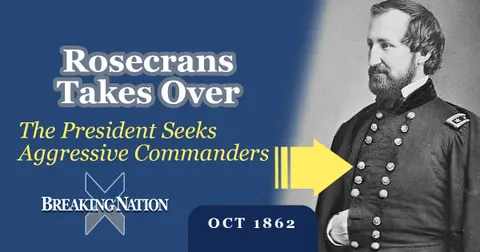
On October 24, 1862, President Abraham Lincoln made a consequential change in Union command in the Western Theater: Major General Don Carlos Buell was removed from command and replaced by Major General William S. Rosecrans. The decision was about more than one general losing his job. It reflected Lincoln’s growing impatience with a Union strategy that seemed too cautious and helped set the stage for the campaigns that would eventually make Chattanooga the critical military prize of the Western Theater.
Buell’s removal had been building for months. He was a capable organizer and disciplinarian, but his cautious approach increasingly frustrated Washington. During the Confederate invasion of Kentucky in the fall of 1862, Buell successfully maneuvered his army into Louisville and eventually confronted Braxton Bragg at Perryville on October 8. The battle was bloody and strategically important because it helped drive the Confederates from Kentucky. Yet Buell failed to pursue Bragg aggressively enough to satisfy Lincoln and Secretary of War Edwin Stanton.
That distinction is important. Buell had accomplished something significant: he helped save Kentucky for the Union. But Washington wanted more than preservation—it wanted destruction of Confederate armies.
Lincoln’s frustration was also connected to a larger strategic objective. The October 24 order did not simply tell Rosecrans to replace Buell. It placed him in command of the newly created Department of the Cumberland and directed him to drive Confederate forces from Kentucky and Middle Tennessee, seize East Tennessee, and threaten the crucial railroad hub at Chattanooga.
Rosecrans appeared to be a promising choice. He had recently distinguished himself at Iuka and Corinth, Mississippi, and had acquired a reputation as an energetic commander. Washington hoped that his aggressiveness would produce the kind of results it believed Buell had failed to deliver.
The reorganization was equally significant. The old Army of the Ohio was redesignated the XIV Army Corps, which soon became known as the Army of the Cumberland. This created a more clearly defined Union command structure in Middle Tennessee and made Chattanooga the obvious strategic objective.
Ironically, Rosecrans would soon discover that aggressive command had its own dangers. At Stones River, just over two months later, his army would fight Bragg in one of the war’s bloodiest battles. Rosecrans would win a costly Union victory—but the campaign also demonstrated how difficult it was to transform Washington’s demand for decisive action into battlefield reality.
Buell’s removal therefore marked a turning point. Lincoln was increasingly willing to sacrifice commanders who appeared too cautious, while Rosecrans represented a new expectation: move, fight, and keep the pressure on. The consequences would shape the Union’s entire strategy in the Western Theater.
Breaking Nation: A Civil War Podcast explores the American Civil War, its turning points, and our national memory. Discover full episodes, transcripts, and resources at www.breakingnation.com — your destination for in-depth Civil War podcast content and fresh perspectives on America’s past. Listen on Apple Podcasts, Spotify and Amazon Music.
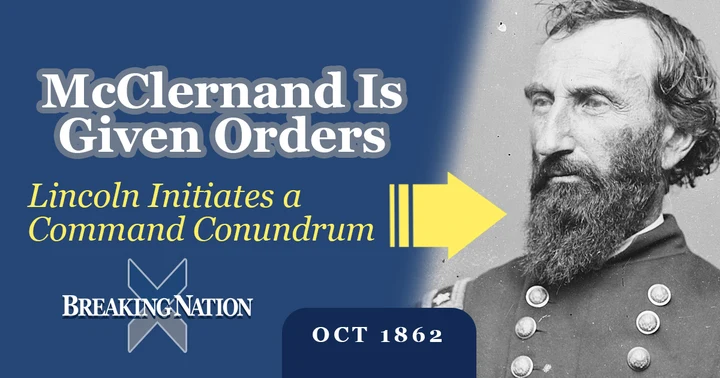
Lincoln’s Order That Put McClernand on a Collision Course with Grant