Why Robert E. Lee Chose Jeb Stuart to Command His Cavalry
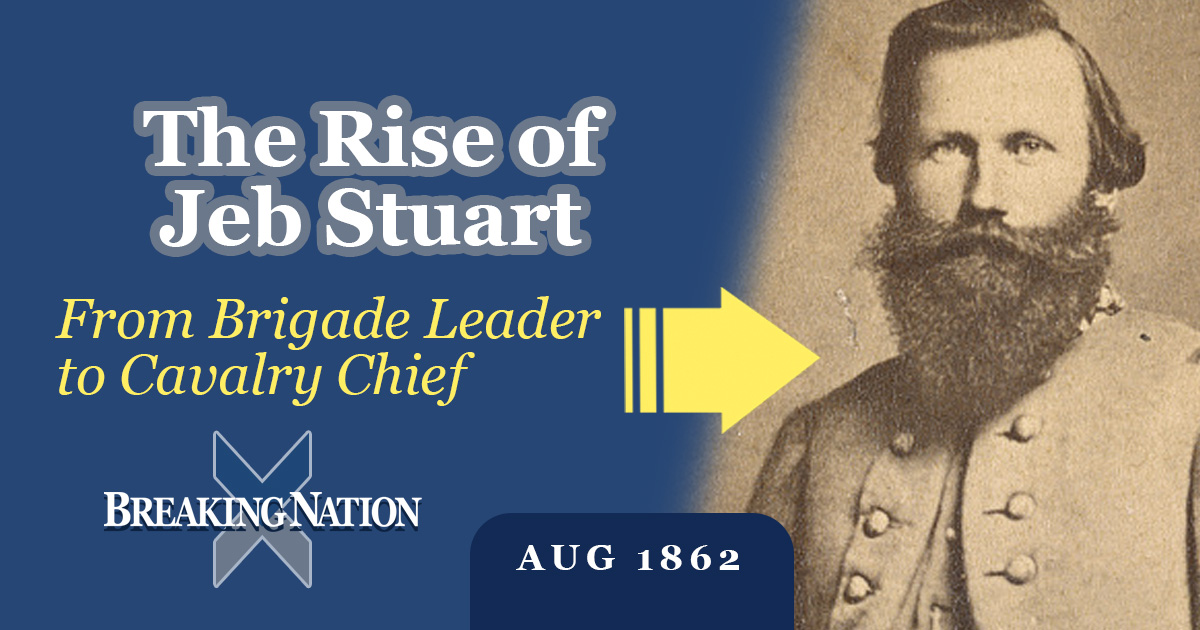
On August 17, 1862, General Robert E. Lee made a decision that would shape the character and effectiveness of the Confederate Army of Northern Virginia for the remainder of the Civil War. By placing Major General J.E.B. Stuart in command of all the army's cavalry, Lee transformed what had been a collection of mounted units into a unified corps capable of performing reconnaissance, screening, raiding, and battlefield support on an unprecedented scale. While Stuart had already earned a reputation for boldness, this appointment institutionalized the growing importance of cavalry in modern warfare.
At first glance, the promotion seemed like a natural reward for Stuart's success. Earlier in 1862, his famous ride around George McClellan's Army of the Potomac had embarrassed Union commanders and elevated Stuart to near-celebrity status throughout the Confederacy. Yet Lee's decision reflected more than admiration for daring exploits. He recognized that cavalry had become indispensable for gathering intelligence, masking troop movements, protecting supply lines, and exploiting battlefield opportunities. Consolidating the mounted forces under a single commander promised greater coordination and efficiency.
The timing was particularly significant. Lee had just emerged from the Seven Days Battles and was preparing to shift the strategic initiative northward against Major General John Pope's Army of Virginia. Stuart's newly unified cavalry immediately proved its value. During the Northern Virginia Campaign, his troopers screened Confederate movements, disrupted Union communications, and famously captured Pope's headquarters and dispatches at Catlett's Station. The intelligence and confusion created by Stuart's operations contributed directly to Lee's victory at the Second Battle of Bull Run later that month.
The appointment also highlighted one of Lee's greatest strengths as a commander: his willingness to delegate significant authority to talented subordinates. Lee trusted Stuart with remarkable independence, allowing him to make operational decisions far from headquarters. That confidence fostered aggressive leadership and gave Confederate cavalry an initiative that often exceeded its Union counterparts during the first half of the war.
Of course, Stuart's promotion also reinforced some of the qualities that would later draw criticism. His flair for dramatic raids occasionally conflicted with his primary responsibility of reconnaissance. The tension between seeking glory and gathering reliable intelligence became painfully apparent during the Gettysburg Campaign in 1863, when Stuart's extended ride left Lee without critical information during the campaign's opening days.
Even so, Stuart's appointment on August 17, 1862, marked a turning point in the evolution of Civil War cavalry. Under his leadership, mounted troops became far more than messengers or pursuit forces. They evolved into an operational arm capable of influencing campaigns before infantry armies even met in battle. Lee's decision strengthened the Army of Northern Virginia at a crucial moment and helped establish Stuart as one of the most recognizable—and consequential—cavalry commanders in American military history.
Breaking Nation: A Civil War Podcast explores the American Civil War, its turning points, and our national memory. Discover full episodes, transcripts, and resources at www.breakingnation.com — your destination for in-depth Civil War podcast content and fresh perspectives on America’s past. Listen on Apple Podcasts, Spotify and Amazon Music.
The Day Black Soldiers Officially Joined the Union Army