Why Corinth Mattered More Than You Think
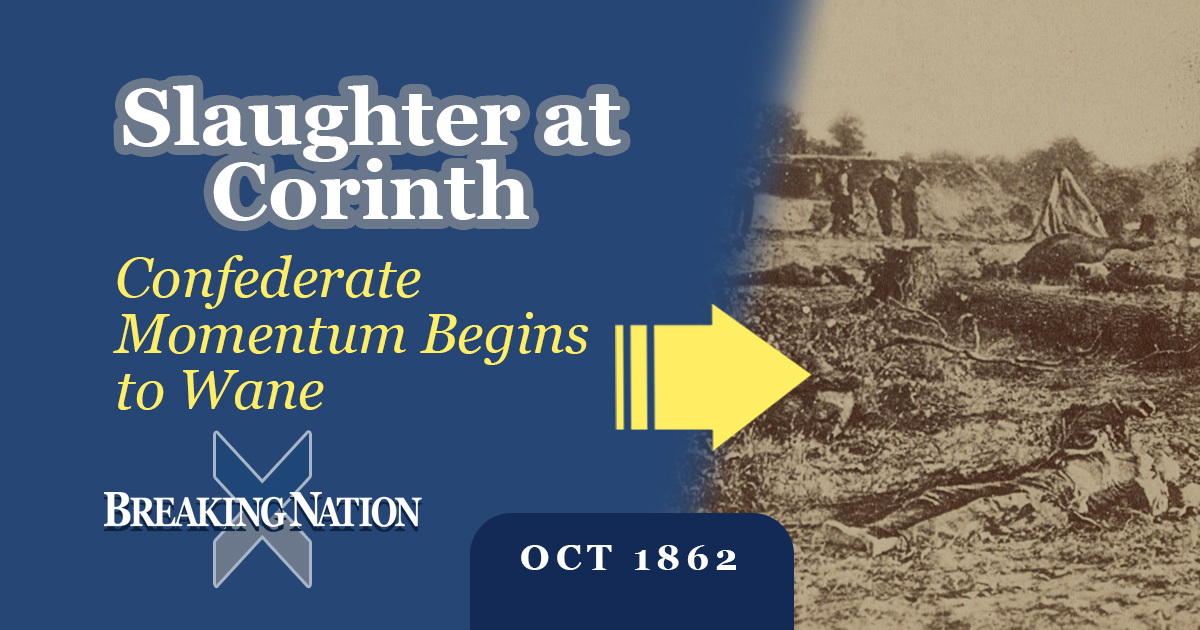
The Battle of Corinth, fought October 3–4, 1862, was one of the most important—and often underappreciated—Union victories in the western theater. Coming only weeks after the bloody battles of Iuka and Antietam, Corinth demonstrated that Confederate armies could still launch dangerous offensives after the disasters of Shiloh and the loss of much of Tennessee, but it also revealed the growing difficulty of restoring Confederate control over the Mississippi Valley.
Corinth itself mattered enormously. Located in northern Mississippi at the intersection of the Memphis & Charleston and Mobile & Ohio railroads, it was a vital transportation hub. Union forces had captured the town in May 1862 after the Battle of Shiloh, and General William S. Rosecrans subsequently fortified it heavily. For Confederate General Earl Van Dorn, recapturing Corinth offered the possibility of disrupting Union communications, threatening Grant's army, and perhaps regaining the strategic initiative in Mississippi.
Van Dorn, commanding roughly 22,000 Confederates, attacked Rosecrans's approximately 23,000 Union soldiers on October 3. The Confederates initially made impressive progress, driving Union troops from their outer positions and forcing Rosecrans's army back toward the heavily fortified town. For a moment, Corinth appeared vulnerable.
But the Union defenses—and Rosecrans's determination—made the difference.
On October 4, Confederate forces renewed the assault, pushing into Corinth's defenses in several places. Yet they could not break the Union line. As the attacks lost momentum, Union troops counterattacked, sending the Confederates into retreat. What had begun as a promising Confederate offensive ended as another costly defeat.
The significance of Corinth goes beyond the battlefield itself. The Confederate defeat effectively ended any serious attempt to recover northern Mississippi and reinforced Union control over the strategic rail network connecting the Mississippi Valley with the Deep South. It also demonstrated the growing importance of fortified positions and disciplined defensive fighting in the western theater.
Perhaps most importantly, Corinth highlighted a recurring problem for the Confederacy in 1862: tactical aggressiveness could not compensate for strategic weakness. Van Dorn had managed to surprise and initially overwhelm portions of Rosecrans's army, but the Confederates lacked the coordination and sustained combat power necessary to finish the job.
For the Union, Corinth helped secure the gains won earlier in the year at Forts Henry and Donelson, Shiloh, and Memphis. The Confederacy still possessed formidable armies, but its ability to reclaim lost territory was steadily shrinking.
In that sense, Corinth was more than another bloody battle. It was another step in the Union's tightening grip on the western Confederacy—and another indication that the war was becoming a long, grinding struggle in which strategic position mattered as much as battlefield courage.
Breaking Nation: A Civil War Podcast explores the American Civil War, its turning points, and our national memory. Discover full episodes, transcripts, and resources at www.breakingnation.com — your destination for in-depth Civil War podcast content and fresh perspectives on America’s past. Listen on Apple Podcasts, Spotify and Amazon Music.
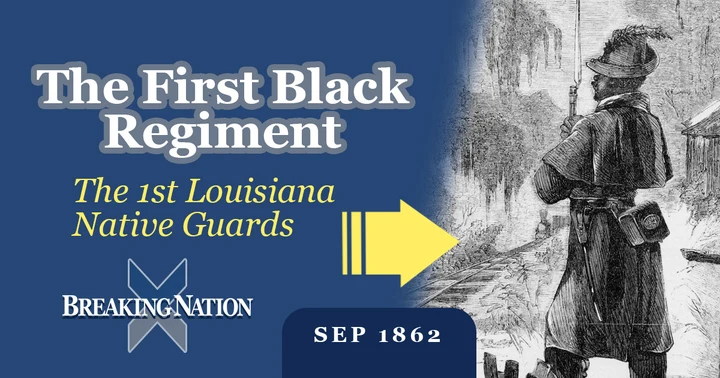
The Day Black Soldiers Officially Joined the Union Army