The North Turns on Lincoln: The Midterm Elections of 1862
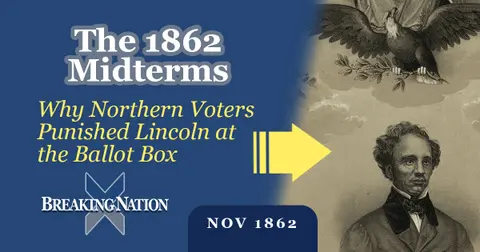
The Midterm Elections of November 4, 1862, delivered a sharp political warning to President Abraham Lincoln. After eighteen months of civil war, mounting casualties and disappointing military results had weakened public confidence in Republican leadership. Democrats capitalized on that frustration, gaining seats in Congress and winning important state elections. For Lincoln, the results threatened to complicate an already difficult task: prosecuting the war while persuading Northern voters that his administration remained capable of restoring the Union.
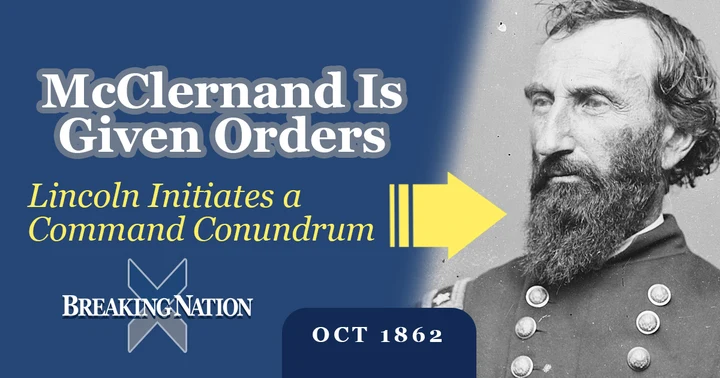
The timing could hardly have been worse. In September, Robert E. Lee’s invasion of Maryland had brought the war into the North’s immediate orbit. The Battle of Antietam stopped Lee’s advance, but the staggering casualties and George B. McClellan’s failure to pursue the retreating Confederates frustrated Lincoln. The president had also announced his preliminary Emancipation Proclamation, signaling that the war’s purpose would extend beyond restoring the Union to attacking slavery. That decision energized abolitionists but alarmed many Northern voters who wanted the war fought primarily to preserve the nation.
Democrats made those anxieties central to their campaigns. Their coalition included supporters of continuing the war as well as Peace Democrats, who favored negotiating with the Confederacy. They criticized Republican military leadership, federal restrictions on civil liberties, and emancipation. Economic pressures and the prospect of conscription added to public discontent. The election was not simply a rejection of emancipation; it reflected a broader debate over the war’s cost, direction, and ultimate purpose.
Some of the Republican losses were especially consequential. In Pennsylvania, Galusha A. Grow, the sitting Speaker of the House, lost his congressional seat to Democrat Charles Denison. Grow had presided over the House during the opening years of the war and helped advance major Republican legislation, including the Homestead Act. His defeat was particularly striking because it removed one of the party’s most prominent congressional leaders. Redistricting had placed a Democratic-leaning county in his district, contributing to his loss.
Pennsylvania also saw Republican-aligned candidate Edward G. Webb lose to Democrat Samuel J. Randall. In New York, meanwhile, Democrat Horatio Seymour defeated Union candidate James S. Wadsworth for governor. Seymour’s victory was especially important because New York was the Union’s most populous state and a major source of troops, money, and industrial resources.
Nationally, Democrats gained roughly two dozen or more House seats, reducing the Republicans to a plurality. Republicans and allied Unionists nevertheless retained the ability to organize the chamber together. The election did not immediately strip Lincoln of legislative control, but it demonstrated that his political position was vulnerable.
The president now faced mounting pressure to deliver results. Military victories would be essential not only to defeat the Confederacy but also to sustain Northern support for the war. As 1862 drew to a close, Lincoln had to contend with two interconnected struggles: defeating the Confederate armies in the field and maintaining the political coalition necessary to keep the Union war effort alive.
Breaking Nation: A Civil War Podcast explores the American Civil War, its turning points, and our national memory. Discover full episodes, transcripts, and resources at www.breakingnation.com — your destination for in-depth Civil War podcast content and fresh perspectives on America’s past. Listen on Apple Podcasts, Spotify and Amazon Music.
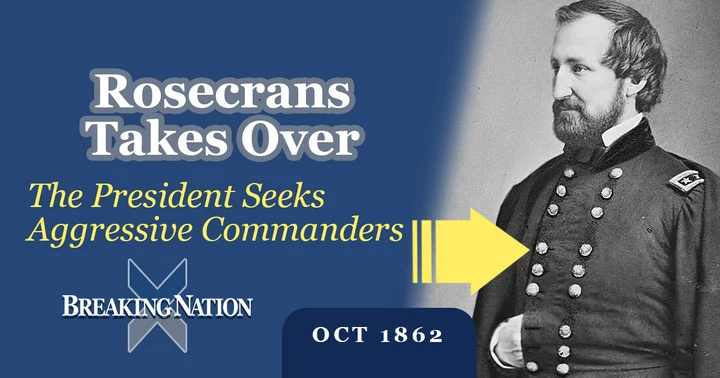
Why Rosecrans Got the Command Buell Lost