The Forgotten Civil War Battle That Shook Lincoln’s War Plans
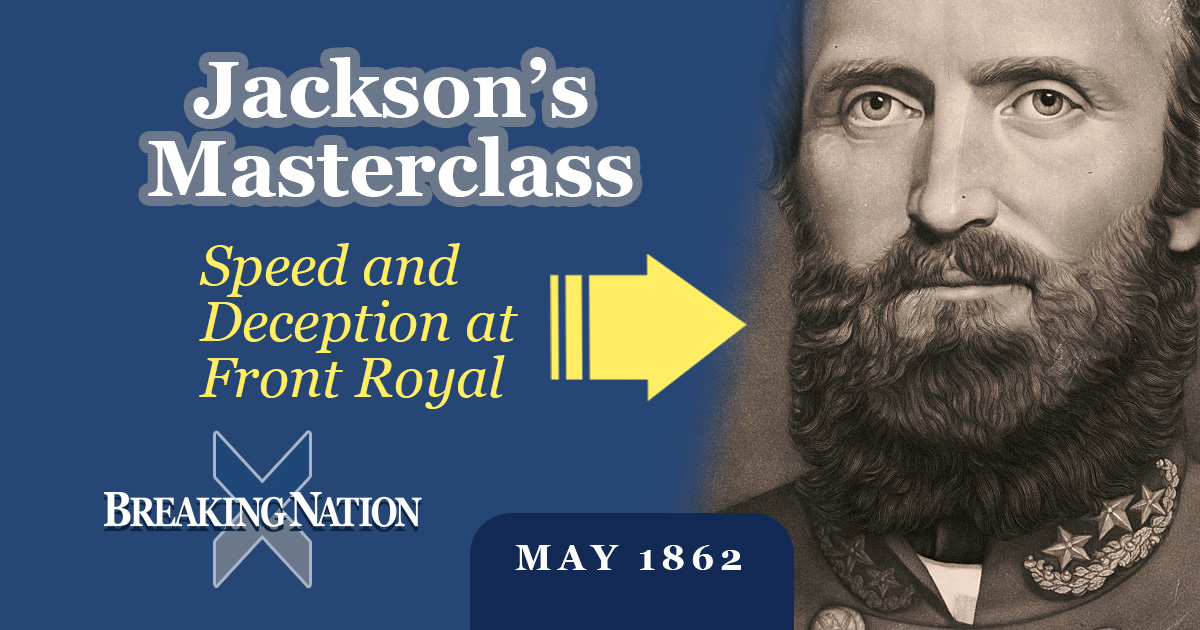
The Battle of Front Royal on May 23, 1862, was one of the most dramatic turning points in Confederate General Thomas J. “Stonewall” Jackson’s famed Shenandoah Valley Campaign. Coming only two weeks after Jackson’s victory at the Battle of McDowell on May 8, Front Royal demonstrated how quickly Jackson could shift from defensive survival to offensive maneuver. More importantly, the battle exposed the vulnerability of Union strategy in the Shenandoah Valley and forced Federal leaders into a reactive posture that ultimately disrupted broader Union operations against Robert E. Lee’s Confederacy in Virginia.
After McDowell, Jackson had temporarily secured the upper Shenandoah Valley against Union advances from western Virginia. Yet the Confederate commander understood that simply holding ground was not enough. The Valley served as both a breadbasket and an invasion corridor, and Jackson’s mission was to keep Union armies off balance while threatening Washington, D.C. Front Royal became the key to achieving that larger objective.
The town itself sat near the eastern edge of the Shenandoah Valley and guarded the flank of Union Major General Nathaniel P. Banks’s army at Strasburg. Banks believed Jackson remained farther south and did not expect a rapid Confederate strike against Front Royal. Jackson exploited this complacency brilliantly. Marching his men with remarkable speed and secrecy, he descended on the small Federal garrison at Front Royal, composed largely of inexperienced troops. The Confederate attack overwhelmed the defenders, many of whom were captured after fierce but brief resistance.
The military significance of the battle extended far beyond the town itself. By seizing Front Royal, Jackson effectively turned Banks’s left flank and threatened his line of retreat northward toward the Potomac River. Banks suddenly faced the danger of encirclement and was forced into a hurried retreat through the Valley. This retreat led directly to the subsequent Battle of Winchester on May 25, where Jackson inflicted another sharp defeat on Union forces.
Front Royal also had strategic consequences far beyond the Shenandoah Valley. President Abraham Lincoln and Union commanders became alarmed by Jackson’s movements and feared a possible Confederate thrust toward Washington. In response, Federal authorities diverted thousands of troops away from Major General George B. McClellan’s Peninsula Campaign against Richmond. Thus, Jackson’s comparatively small army achieved an outsized strategic effect by tying down larger Union forces and contributing indirectly to the defense of the Confederate capital.
In many ways, Front Royal illustrated the essence of Jackson’s Valley Campaign: speed, deception, aggressive maneuver, and psychological impact. Though smaller than many Civil War battles, its consequences rippled across the eastern theater and helped cement Jackson’s reputation as one of the Confederacy’s most formidable field commanders.
Breaking Nation: A Civil War Podcast explores the American Civil War, its turning points, and our national memory. Discover full episodes, transcripts, and resources at www.breakingnation.com — your destination for in-depth Civil War podcast content and fresh perspectives on America’s past. Listen on Apple Podcasts, Spotify and Amazon Music.
The Day Black Soldiers Officially Joined the Union Army