The Bloodiest Day: What Really Happened at Antietam
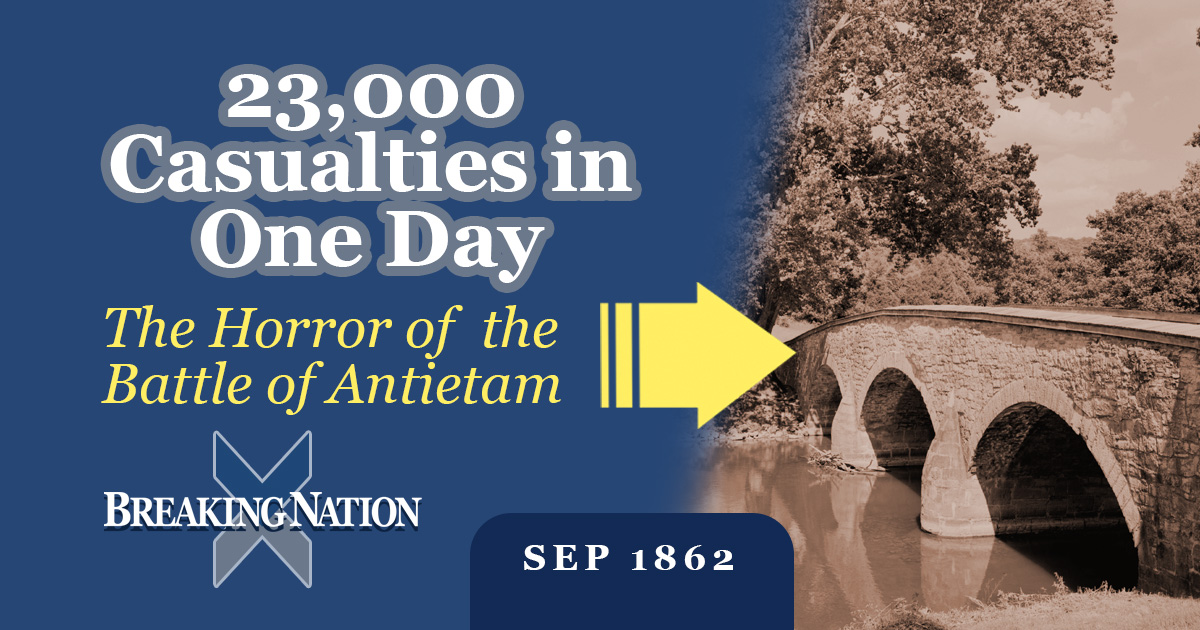
On September 17, 1862, roughly 100,000 soldiers collided near Sharpsburg, Maryland, in what became the bloodiest single day in American history. The Battle of Antietam was not a decisive military victory in the traditional sense. Robert E. Lee’s Army of Northern Virginia was battered, George B. McClellan’s Army of the Potomac failed to destroy it, and Lee ultimately withdrew across the Potomac. Yet Antietam was enormously significant because it changed the political and strategic direction of the Civil War.
Lee’s invasion of Maryland had been ambitious. After Confederate victories during the summer, he hoped that carrying the war into Union territory might disrupt Northern morale, encourage European recognition of the Confederacy, and potentially influence the upcoming Northern elections. Instead, Antietam stopped the invasion. Lee’s army was forced back into Virginia, ending the Confederacy’s first major attempt to bring the war decisively onto Northern soil.
The battle itself was a horrifying demonstration of Civil War firepower. Fighting raged across places that have become legendary: the Cornfield, the West Woods, the Sunken Road—soon known as Bloody Lane—and Burnside’s Bridge. By the end of the day, approximately 23,000 men were killed, wounded, or missing. The casualty figures were staggering, especially considering that the battle was essentially fought within a single day.
Militarily, however, Antietam exposed the limitations of McClellan’s generalship. He possessed enormous advantages, including numerical superiority and knowledge of Lee’s scattered dispositions, yet he failed to commit his reserves effectively or deliver the crushing blow Abraham Lincoln wanted. Lee, meanwhile, repeatedly risked destruction by dividing his army in the face of a superior opponent. The fact that either army remained capable of fighting at the end of September 17 was remarkable.
The battle’s greatest consequence came afterward. Because Lee had been forced to retreat, Lincoln could claim enough of a strategic success to issue the preliminary Emancipation Proclamation five days later, on September 22. The proclamation transformed the war’s meaning. The conflict was no longer simply a struggle to preserve the Union; emancipation became an explicit Union war aim. It also made the destruction of slavery increasingly inseparable from military victory.
Antietam therefore stands at a fascinating crossroads in American history. It was a tactical bloodbath, an operational near-miss, and a strategic turning point. McClellan failed to destroy Lee’s army, but he succeeded in something perhaps more consequential: he stopped Lee’s invasion at a moment when Lincoln desperately needed a battlefield success.
Antietam did not end the Civil War. In many ways, it ensured that the war would become something much larger—and much more transformative—than either side had initially imagined.
Breaking Nation: A Civil War Podcast explores the American Civil War, its turning points, and our national memory. Discover full episodes, transcripts, and resources at www.breakingnation.com — your destination for in-depth Civil War podcast content and fresh perspectives on America’s past. Listen on Apple Podcasts, Spotify and Amazon Music.

Lee Invades the North: The Gamble That Changed the Civil War