Retreat to the James: The End of Union Hopes on the Peninsula
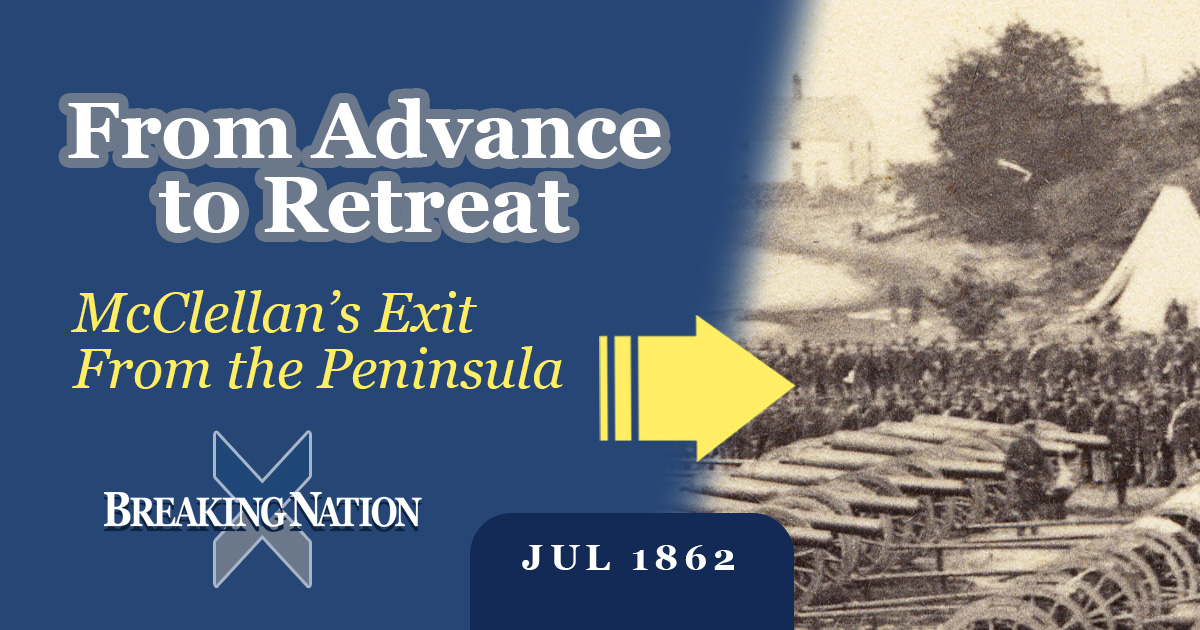
The retreat of Union forces under George B. McClellan from the outskirts of Richmond in July 1862, following the Seven Days Battles, marked one of the most consequential operational failures of the early Civil War. It effectively ended the Peninsula Campaign and reshaped the strategic trajectory of the conflict in the Eastern Theater.
Militarily, the retreat signaled the collapse of McClellan’s long-anticipated plan to seize the Confederate capital via the Virginia Peninsula. For months, McClellan had built up the Army of the Potomac into a formidable, well-drilled force, and his operational concept depended on overwhelming Confederate defenses with superior numbers and coordination. Yet during the Seven Days, Robert E. Lee seized the initiative, launching a series of aggressive attacks that disrupted Union plans and forced McClellan into a defensive posture. Although the Union army was not destroyed and in several engagements—such as Malvern Hill—it inflicted heavy casualties on attacking Confederate forces, McClellan’s decision to withdraw to the James River effectively conceded the campaign.
Strategically, the retreat had outsized implications. Richmond remained in Confederate hands, preserving the political and symbolic center of the Confederacy at a critical moment. This outcome bolstered Southern morale and reinforced confidence in Lee as the architect of a more offensive Confederate strategy. Conversely, in the North, the retreat deepened frustration with McClellan’s caution and raised serious doubts in Washington about whether the Union’s largest field army was being used to its full potential.
Politically, the failure had immediate consequences. President Abraham Lincoln and his administration had invested heavily in the Peninsula Campaign as a war-winning maneuver. McClellan’s retreat forced a reconsideration of Union strategy in Virginia and contributed to the eventual decision to consolidate forces under a more aggressive command structure, setting the stage for later campaigns in Northern Virginia. It also intensified the already strained relationship between McClellan and the Lincoln administration, particularly over issues of reinforcements, intelligence estimates of Confederate strength, and the general’s reluctance to pursue retreating enemy forces.
In a broader sense, the retreat demonstrated a recurring pattern in the Eastern Theater during 1862: Union armies possessing material superiority but failing to convert it into decisive strategic outcomes. The episode underscored the importance of operational tempo, leadership decisiveness, and the psychological dimension of warfare. McClellan’s withdrawal did not simply end a campaign—it reshaped perceptions of what kind of war the Civil War would become, one in which audacity and risk-taking increasingly competed with caution and methodical planning.
Breaking Nation: A Civil War Podcast explores the American Civil War, its turning points, and our national memory. Discover full episodes, transcripts, and resources at www.breakingnation.com — your destination for in-depth Civil War podcast content and fresh perspectives on America’s past. Listen on Apple Podcasts, Spotify and Amazon Music.
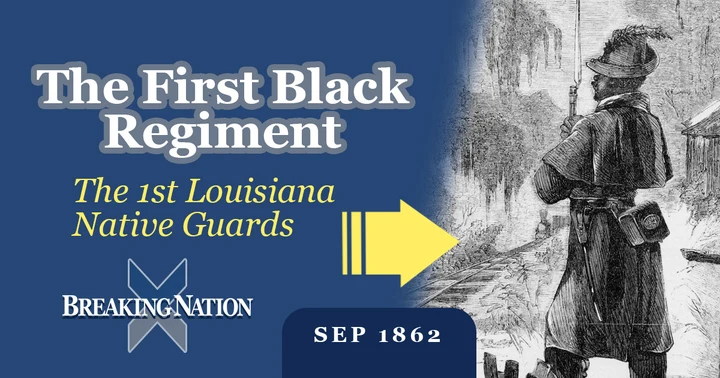
The Day Black Soldiers Officially Joined the Union Army