Lee Invades the North: The Gamble That Changed the Civil War
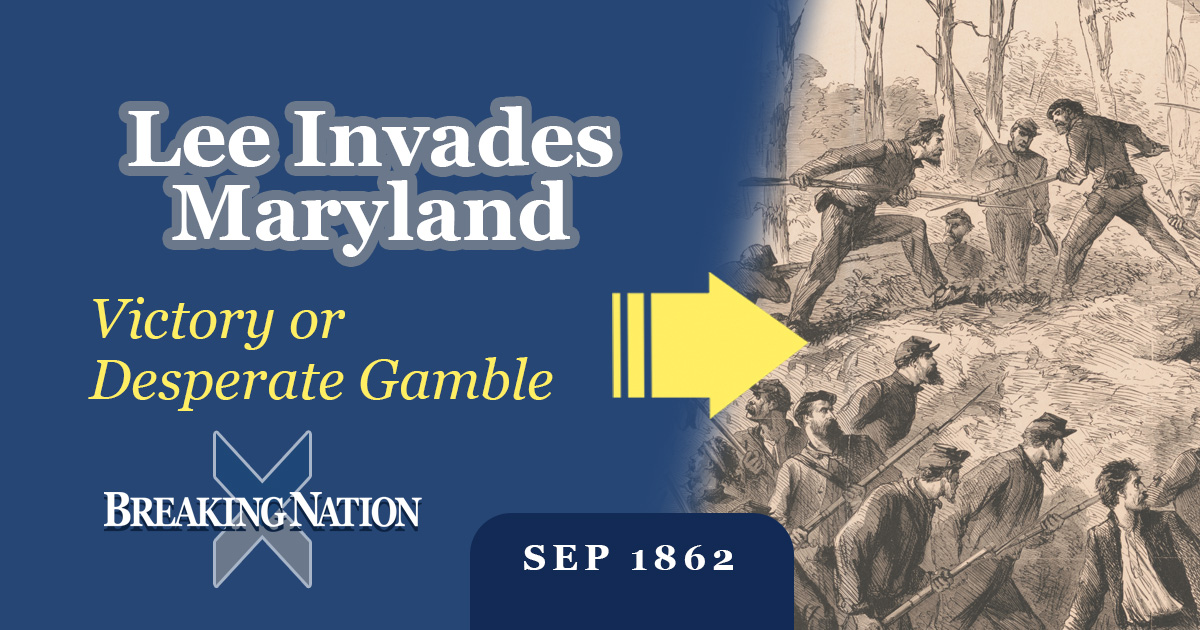
In September 1862, Robert E. Lee made one of the most consequential decisions of the Civil War: he took the Army of Northern Virginia across the Potomac River and into Maryland. Coming only weeks after the Confederate victory at Second Bull Run, the invasion represented Lee’s attempt to transform battlefield momentum into a strategic and political breakthrough. It nearly worked—and its failure would have enormous consequences.
Lee’s objectives were ambitious. The Confederate army needed supplies, and Maryland offered an opportunity to forage in a state divided by loyalties. More importantly, Lee hoped that Confederate successes on Northern soil might weaken Union morale and influence the upcoming elections. He also believed that victories in Maryland might encourage European powers, particularly Britain and France, to recognize the Confederacy. Perhaps most significantly, an invasion could force Abraham Lincoln’s government to divert attention and resources away from the Confederate heartland.
Lee’s army crossed the Potomac near Leesburg and Point of Rocks in early September and moved toward Frederick. For a brief moment, it appeared that the Confederacy had seized the strategic initiative. But Marylanders did not rise in the numbers Lee may have hoped for. The invasion also exposed the inherent danger of operating deep inside enemy territory: every mile away from Virginia lengthened Confederate supply lines while bringing Lee closer to the concentrated Union armies.
Then came the extraordinary discovery of Lee’s lost Special Orders No. 191. A Union soldier found a copy wrapped around three cigars near Frederick. The orders revealed Lee’s army had been divided and outlined the movements of his scattered commands. George B. McClellan, now commanding the Army of the Potomac, suddenly possessed intelligence that gave him an opportunity to destroy Lee's army piecemeal.
McClellan moved faster than usual, but not fast enough to prevent Lee from concentrating. The resulting Battle of Antietam on September 17 became the bloodiest single day in American history, with roughly 23,000 Americans killed, wounded, or missing.
Tactically, Antietam was at best inconclusive. Strategically, however, it was a Union victory because Lee was forced to retreat across the Potomac. That mattered enormously. Lincoln had been waiting for a battlefield success substantial enough to give political credibility to the Emancipation Proclamation. Five days after Antietam, he issued the preliminary proclamation, announcing that enslaved people in areas still in rebellion would be declared free on January 1, 1863.
Lee’s Maryland campaign therefore marked a turning point. His invasion failed to achieve Confederate independence, foreign recognition, or a decisive military victory. Instead, it gave Lincoln the opportunity to redefine the war. The conflict was increasingly becoming not simply a struggle to preserve the Union, but a war aimed at destroying slavery as the institution that sustained the Confederacy.
Lee would invade the North again in 1863. But Maryland in 1862 demonstrated a fundamental reality of the Civil War: Confederate victories were not enough. To win independence, Lee needed a victory so decisive that the Union would lose the will to continue. At Antietam, he came close to creating that crisis—but ultimately failed.
Breaking Nation: A Civil War Podcast explores the American Civil War, its turning points, and our national memory. Discover full episodes, transcripts, and resources at www.breakingnation.com — your destination for in-depth Civil War podcast content and fresh perspectives on America’s past. Listen on Apple Podcasts, Spotify and Amazon Music.
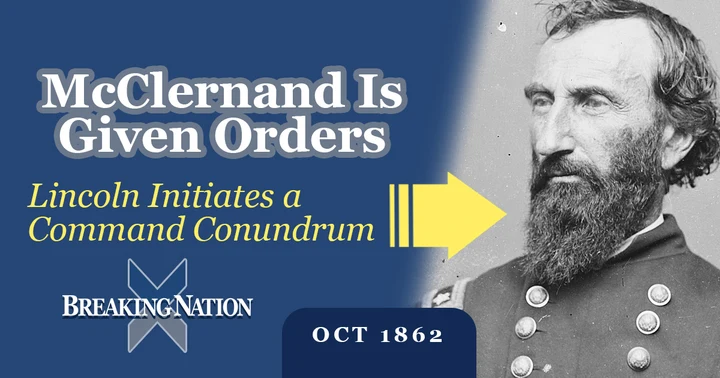
Lincoln’s Order That Put McClernand on a Collision Course with Grant