How Stonewall Jackson Shocked the Union at Winchester
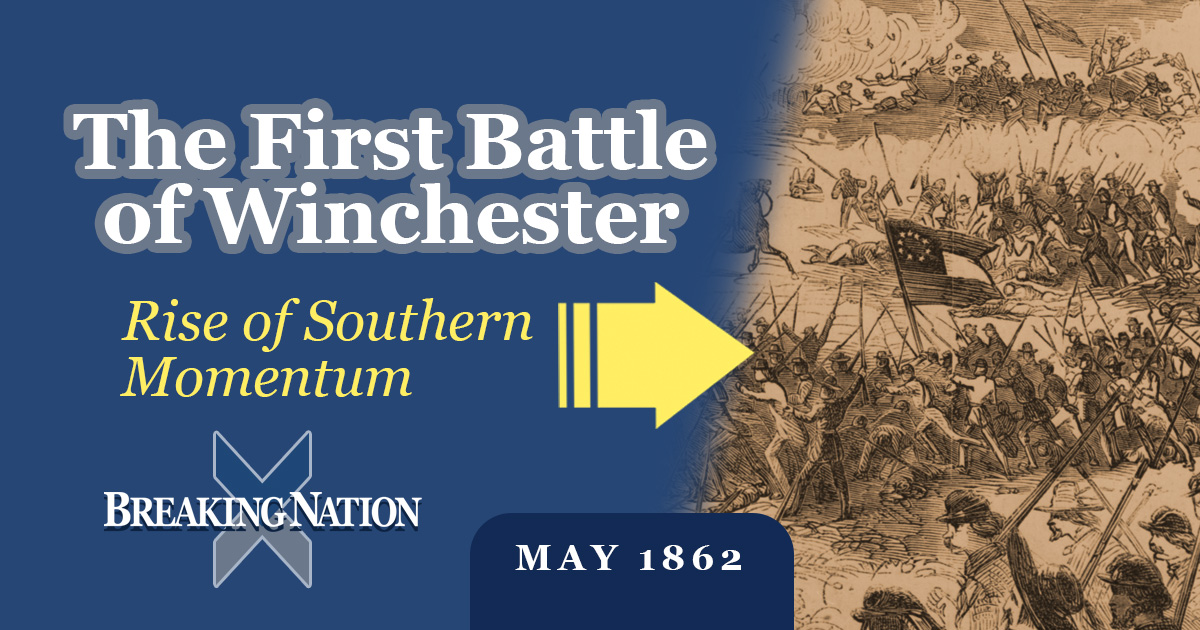
The First Battle of Winchester, fought on May 25, 1862, was one of the defining moments of Confederate General Thomas J. “Stonewall” Jackson’s celebrated Shenandoah Valley Campaign. Though small in scale compared to later Civil War battles, Winchester carried enormous strategic and psychological significance. Jackson’s victory demonstrated how mobility, deception, and aggressive leadership could allow a smaller Confederate force to shape the wider course of the war in the East.
The battle came after a rapid sequence of maneuvers in Virginia’s Shenandoah Valley. Following Confederate success at McDowell earlier in May, Jackson moved quickly against Union forces commanded by Major General Nathaniel P. Banks. Banks had withdrawn northward toward Winchester, believing his army could regroup there safely. Jackson, however, understood that speed itself could be a weapon. His troops marched hard through the Valley, striking Banks before Union forces could consolidate or receive substantial reinforcements.
The fighting on May 25 centered south of Winchester and within the town itself. Confederate attacks steadily pushed Union troops backward, and Banks’s army eventually retreated in disorder across the Potomac River into Maryland. Militarily, the battle handed the Confederacy control of the lower Shenandoah Valley for the moment, but its broader significance reached far beyond the battlefield.
Most importantly, Winchester intensified fears in Washington that Confederate forces might threaten the capital itself. President Abraham Lincoln and Union military leaders became deeply concerned about Jackson’s movements. As a result, thousands of Union troops that might otherwise have reinforced Major General George B. McClellan on the Peninsula near Richmond were instead diverted to chase Jackson in the Valley. In this sense, Jackson achieved exactly what Confederate leadership hoped for: he tied down larger Union armies through maneuver and uncertainty.
The battle also elevated Jackson’s reputation dramatically. Newspapers across the South celebrated him as a military genius capable of outmarching and outthinking his opponents. His Valley Campaign, with Winchester as one of its high points, became a classic example studied by military historians for its operational brilliance. Jackson’s ability to use geography, secrecy, and rapid movement foreshadowed later campaigns in modern warfare where speed and initiative outweighed sheer numbers.
Finally, the First Battle of Winchester revealed an important truth about the Civil War in 1862: the conflict would not be won quickly or easily. Even when Union armies possessed greater manpower and resources, Confederate commanders could still exploit hesitation and poor coordination. Winchester was therefore more than a tactical Confederate victory; it was a strategic warning that the war’s outcome remained far from certain.
Breaking Nation: A Civil War Podcast explores the American Civil War, its turning points, and our national memory. Discover full episodes, transcripts, and resources at www.breakingnation.com — your destination for in-depth Civil War podcast content and fresh perspectives on America’s past. Listen on Apple Podcasts, Spotify and Amazon Music.
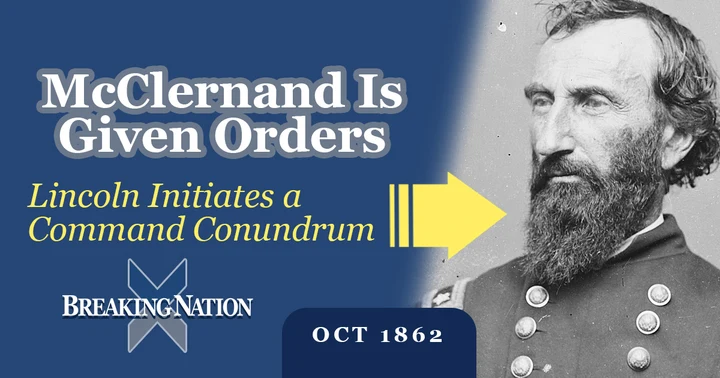
Lincoln’s Order That Put McClernand on a Collision Course with Grant