How New Orleans Fell Without a Massive Land Battle
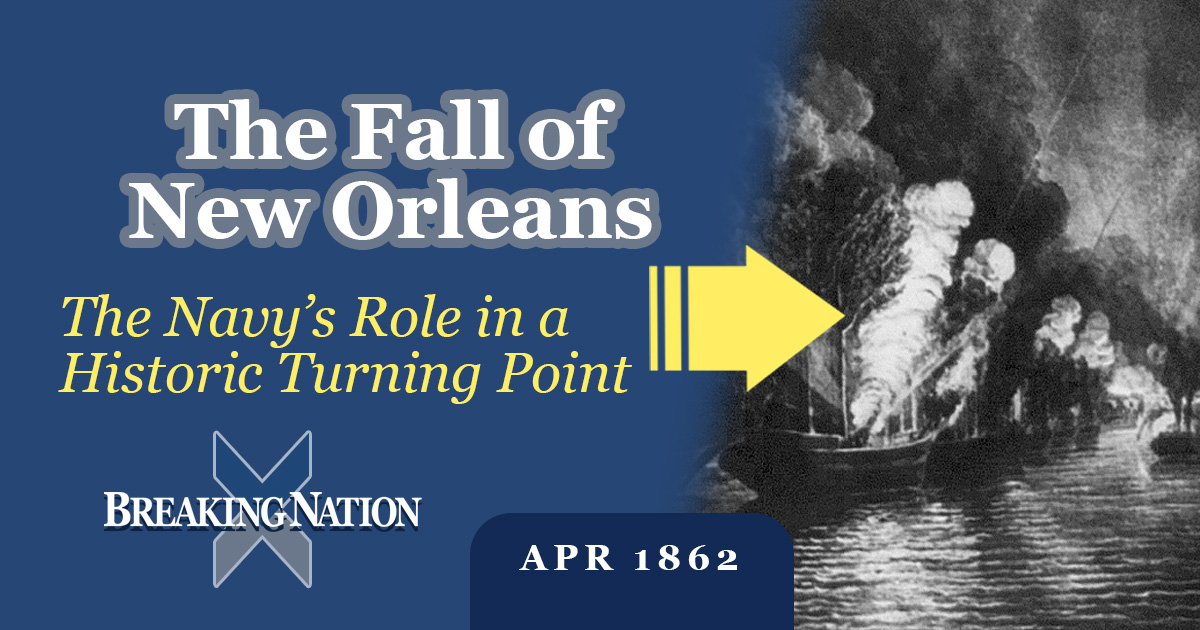
The capture of New Orleans in 1862 marked one of the most significant turning points in the Civil War, both strategically and psychologically. New Orleans was the largest city in the Confederacy, a bustling port, and a commercial hub whose control was vital to the South’s economy and supply lines. Its location at the mouth of the Mississippi River made it a gateway to the interior of the Confederacy, meaning that whoever controlled the city effectively controlled access to the river and the vast agricultural regions upriver. Securing New Orleans, therefore, wasn’t just a symbolic victory—it was a practical one that struck at the heart of the Confederate logistical network.
The accomplishment of this feat was a combination of careful planning, daring naval operations, and a bit of audacity. Commanded by Admiral David Farragut, the Union navy executed a bold plan to bypass the Confederate defenses along the river. These defenses included a chain boom stretched across the river, Forts Jackson and St. Philip guarding the approach, and a flotilla of smaller Confederate vessels. Farragut’s fleet faced these obstacles on April 24, 1862, under heavy fire, yet managed to sail past the forts in a dramatic nighttime maneuver. This was not just brute force; it required precise coordination, courage, and discipline under fire. Farragut’s decision to push past the forts rather than engage in prolonged bombardment showcased a willingness to gamble for strategic advantage—a gamble that paid off spectacularly.
Once the fleet was upriver, the Confederate river defenses were effectively neutralized, and New Orleans was left vulnerable. The city itself, lacking adequate land defenses and facing the overwhelming firepower of the Union fleet, was quickly surrendered. The capture had an immediate impact: it deprived the Confederacy of its largest city, disrupted vital trade routes, and boosted Union morale. Politically, it demonstrated that the Union could project power deep into the Southern heartland, challenging the notion that Confederate territory was inviolable. Militarily, it paved the way for further operations along the Mississippi, including campaigns in Baton Rouge, Natchez, and eventually Vicksburg, which would complete the Union’s strategic aim of controlling the river from its mouth to its headwaters.
In sum, the fall of New Orleans was more than a tactical victory—it was a demonstration of strategic vision, naval ingenuity, and operational audacity. It underscored how control of key geographic and economic points could shape the broader trajectory of the war, and it highlighted the growing effectiveness of Union combined arms operations in undermining the Confederacy’s ability to sustain itself. This was a triumph of planning and execution that reshaped the course of the conflict in the western theater.
Breaking Nation: A Civil War Podcast explores the American Civil War, its turning points, and our national memory. Discover full episodes, transcripts, and resources at www.breakingnation.com — your destination for in-depth Civil War podcast content and fresh perspectives on America’s past. Listen on Apple Podcasts, Spotify and Amazon Music.
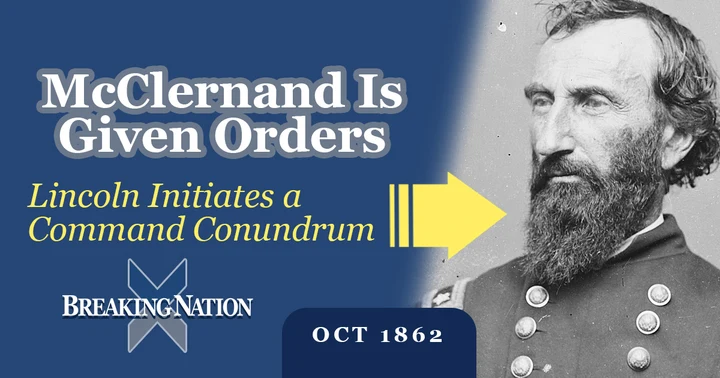
Lincoln’s Order That Put McClernand on a Collision Course with Grant