Belle Boyd Captured: The Confederate Spy Who Challenged the Union in 1862
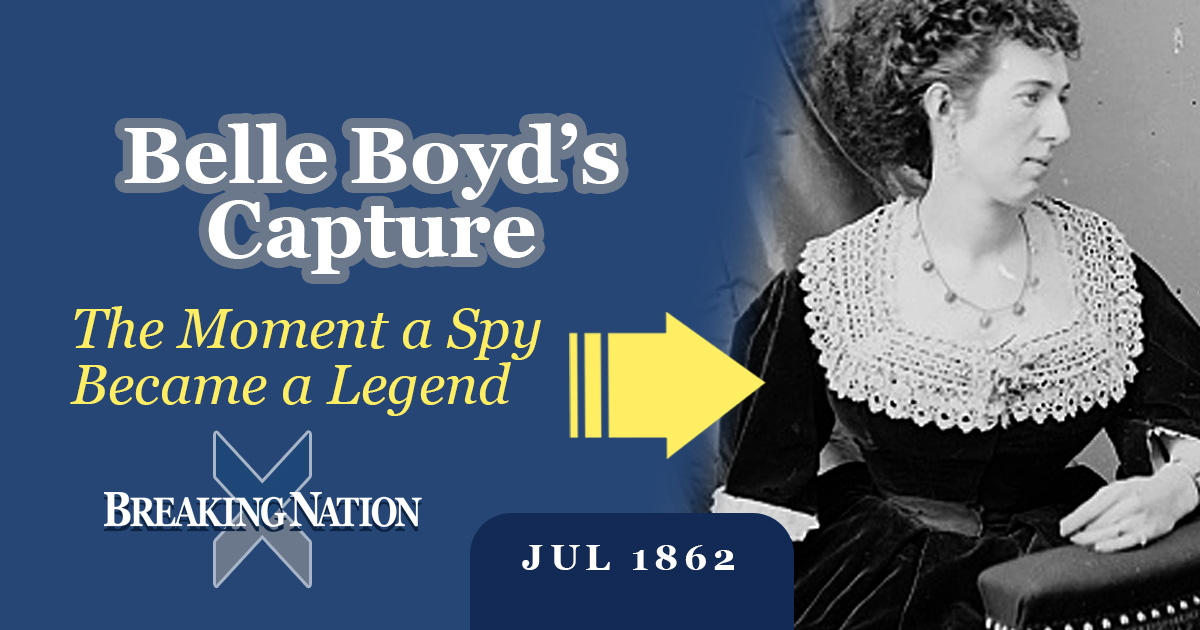
On July 29, 1862, Confederate spy Belle Boyd was captured by Union forces near Warrenton, Virginia, marking one of the most famous episodes in the colorful—and often exaggerated—career of the Civil War's best-known female espionage figure. Although Boyd's actual intelligence contributions remain the subject of debate among historians, her capture symbolized the increasingly sophisticated and relentless intelligence war developing alongside the military campaigns of 1862.
By the summer of 1862, Virginia had become a chessboard of shifting armies. Following George B. McClellan's unsuccessful Peninsula Campaign and Robert E. Lee's assumption of command of the Army of Northern Virginia, both sides desperately sought reliable information about enemy movements. Scouts, signal stations, intercepted correspondence, local civilians, and informal spy networks all became essential military tools. Boyd operated within this environment, using her youth, charm, social status, and willingness to take enormous risks to gather information for Confederate officers.
According to both wartime accounts and Boyd's own memoirs, she repeatedly crossed Union lines carrying messages and military intelligence. Her most celebrated achievement allegedly occurred earlier in May 1862, when she claimed to have provided crucial information to Confederate General Thomas "Stonewall" Jackson during the Shenandoah Valley Campaign. While historians question the extent of her influence on Jackson's operations, there is little doubt that Union authorities considered her activities troublesome enough to warrant close surveillance.
Boyd's capture near Warrenton reflected the Union Army's growing awareness that civilian intelligence networks posed genuine military threats. Rather than dismissing women as politically harmless observers, Federal commanders increasingly recognized that they could serve as effective couriers, informants, and recruiters. Boyd's arrest demonstrated that the Union was becoming more aggressive in identifying and disrupting Confederate espionage operations throughout occupied territory.
Ironically, Boyd's imprisonment only increased her fame. Newspapers on both sides of the conflict eagerly covered her exploits, transforming her into something of a wartime celebrity. In the South, she became a symbol of feminine courage and patriotic sacrifice. In the North, reactions ranged from amusement to condemnation, with many portraying her as reckless or dangerously subversive. Her celebrity foreshadowed the modern phenomenon of public fascination with spies, where myth and reality often become intertwined.
From a broader historical perspective, Belle Boyd's capture illustrates that the Civil War was fought not only on battlefields but also through information gathering, deception, and civilian participation. Women played far more active roles in intelligence operations than nineteenth-century social conventions would have suggested. Boyd's story reminds us that espionage, while often overshadowed by famous battles, became an increasingly important component of modern warfare. Her arrest near Warrenton therefore represents more than the detention of a single Confederate agent; it reflects the emergence of intelligence as a critical weapon in the Civil War, one whose influence extended far beyond the front lines.
Breaking Nation: A Civil War Podcast explores the American Civil War, its turning points, and our national memory. Discover full episodes, transcripts, and resources at www.breakingnation.com — your destination for in-depth Civil War podcast content and fresh perspectives on America’s past. Listen on Apple Podcasts, Spotify and Amazon Music.
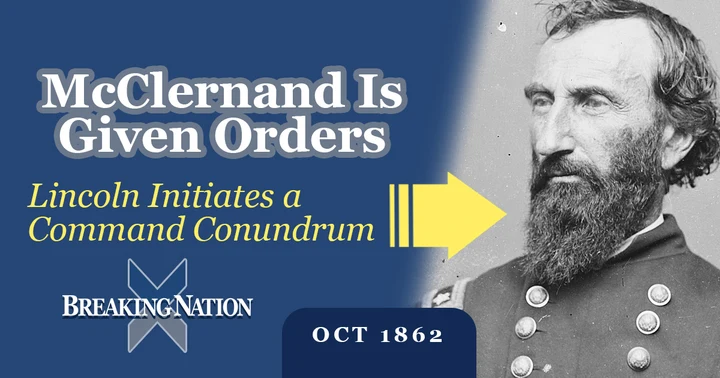
Lincoln’s Order That Put McClernand on a Collision Course with Grant