Why Generals Feared the Joint Committee on the Conduct of the War
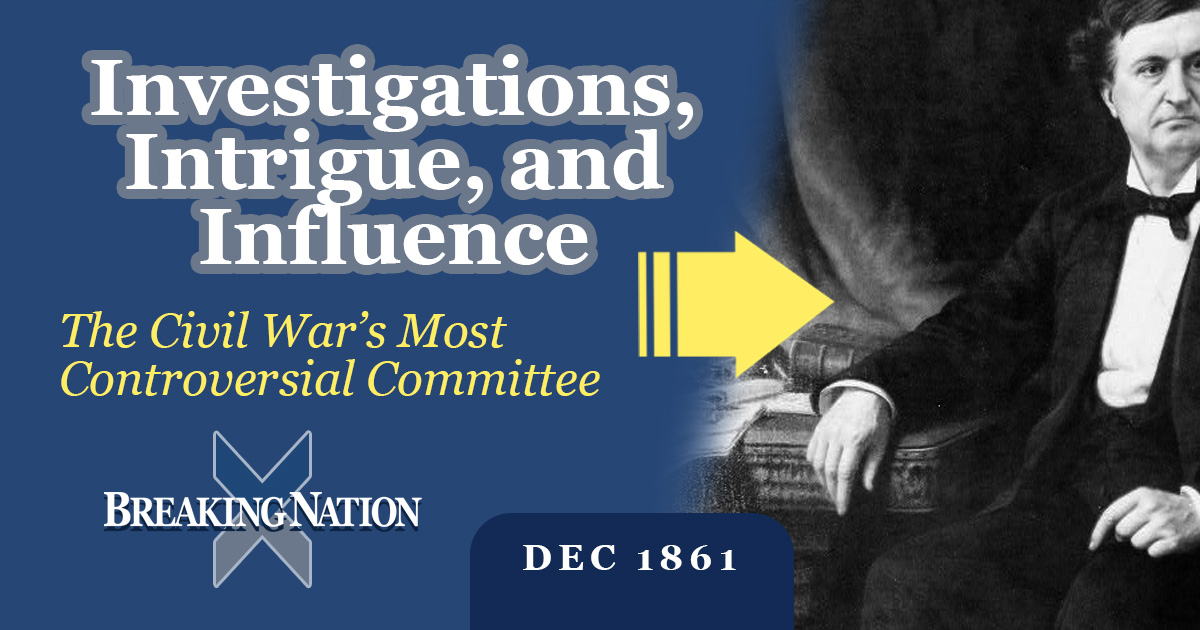
The creation of the Joint Committee on the Conduct of the War on December 9, 1861, marked one of the most consequential political interventions in the Union war effort—an attempt by Congress to assert oversight, shape military strategy, and channel the anxieties of a nation still reeling from early setbacks. Its significance lies not only in what it did, but in what its very existence revealed about the shifting balance of power during the Civil War.
Formed in the wake of the Union defeat at Ball’s Bluff, the committee emerged from a climate of public frustration and congressional suspicion. Many legislators—especially Radical Republicans—believed that the Lincoln administration and senior military officers were not prosecuting the war with sufficient vigor. The committee offered them a formal mechanism to investigate battlefield failures, scrutinize generals, and push for a more aggressive, emancipation-minded prosecution of the conflict. In this sense, the committee became an early battleground in the larger contest over the war’s purpose.
One of its central impacts was political: it strengthened the influence of Radical Republicans at a moment when their policy preferences were far from universally accepted. Through hearings and reports, the committee promoted narratives that supported harsher war measures, including emancipation, confiscation of property, and the appointment of generals they deemed more committed to defeating slavery as well as secession. Even when the committee lacked direct authority over military operations, its investigations shaped public opinion and exerted indirect pressure on the administration.
Equally significant was the committee’s effect on civil-military relations. Senior officers often viewed its inquiries with resentment or outright hostility, seeing them as political meddling by civilians who lacked military expertise. Some generals—George B. McClellan foremost among them—came to regard the committee as a partisan force determined to undermine their commands. This tension highlighted enduring questions about civilian control, accountability, and the proper boundaries of wartime oversight. The committee’s work sometimes contributed to an atmosphere of distrust, but it also ensured that military decision-making did not drift beyond democratic scrutiny at a moment of national crisis.
Finally, the committee’s creation reflected the larger reality that the Civil War transformed the federal government. Congress, not just the executive branch, expanded its institutional reach. By investigating everything from battlefield blunders to procurement fraud, the committee helped modernize expectations of wartime oversight and public transparency.
In short, the Joint Committee on the Conduct of the War symbolized both the urgency and the uncertainty of late 1861. It was a tool for accountability, a mouthpiece for Radical Republican priorities, and a reminder that the struggle to define the Union war effort was as much political as it was military.
Breaking Nation: A Civil War Podcast explores the American Civil War, its turning points, and our national memory. Discover full episodes, transcripts, and resources at www.breakingnation.com — your destination for in-depth Civil War podcast content and fresh perspectives on America’s past. Listen on Apple Podcasts, Spotify and Amazon Music.
A Crisis in Richmond: Why Davis Reorganized His Cabinet