Why Fort Donelson Was the Confederacy’s First Major Disaster
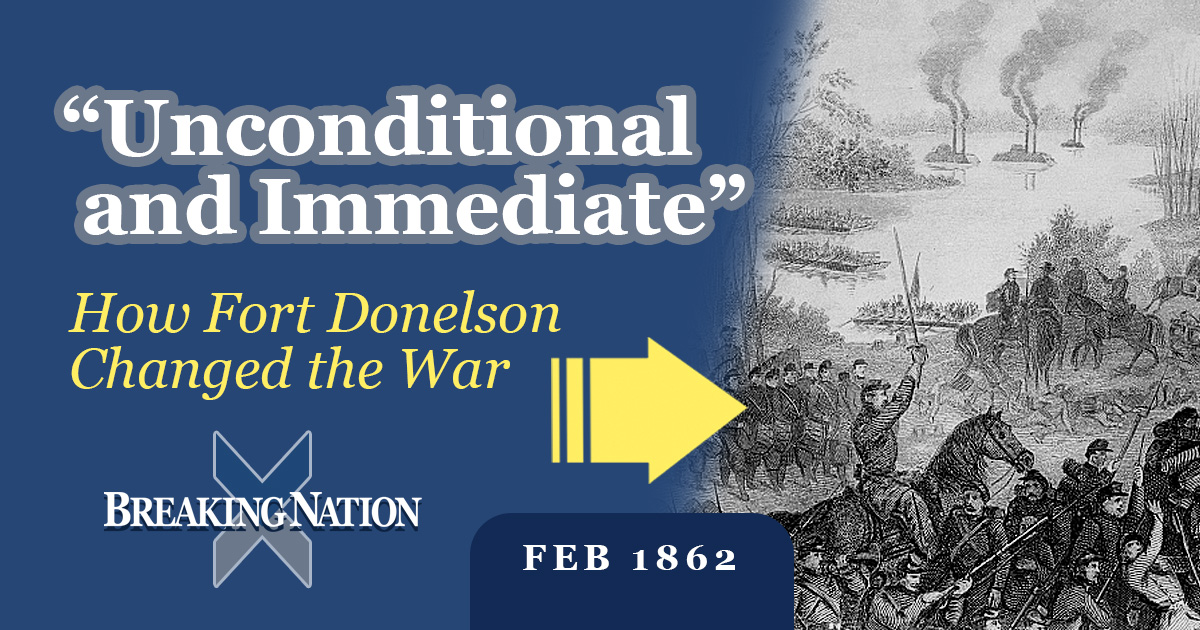
The battle and surrender of Fort Donelson in February 1862 marked one of the most consequential turning points of the Civil War’s opening year. Coming on the heels of the Union capture of Fort Henry, Donelson transformed a promising western offensive into a strategic breakthrough and elevated Ulysses S. Grant from relative obscurity to national prominence.
Fort Donelson sat astride the Cumberland River, guarding the waterway into central Tennessee and, ultimately, Nashville. After Fort Henry fell on February 6, Confederate commanders rushed to hold Donelson, believing it could still block Union penetration. What followed between February 11 and 16 was not a single dramatic clash but a grinding, confused struggle. Union forces encircled the fort, while Confederate generals John B. Floyd, Gideon Pillow, and Simon Buckner vacillated between breakout attempts and defensive caution. A failed Confederate attack on February 15 briefly opened an escape route, but poor coordination squandered the opportunity. By the next morning, the fort was effectively trapped.
Grant’s response to Buckner’s request for terms became instantly famous: he would accept nothing but “unconditional and immediate surrender.” The phrase captured the northern imagination and earned Grant the nickname “Unconditional Surrender” Grant. More importantly, it signaled a shift in the Union’s conduct of the war in the West. Grant demonstrated a willingness to press relentlessly, accept risk, and demand decisive results—qualities that contrasted sharply with the caution that plagued Union operations elsewhere.
The surrender itself was staggering in scale for early 1862. Nearly 13,000 Confederate soldiers were taken prisoner, along with artillery, small arms, and supplies the South could ill afford to lose. The psychological impact was just as severe. Fort Donelson was the first major Confederate army to capitulate outright, shattering the illusion that Southern forces in the western theater were secure behind river fortifications.
Strategically, Donelson cracked open the Confederate defensive line across Kentucky and Tennessee. With both the Tennessee and Cumberland Rivers in Union hands, Confederate forces were forced to abandon Nashville, the first Confederate state capital to fall. The loss compelled Albert Sidney Johnston to retreat deep into the interior, setting the stage for the bloody confrontation at Shiloh two months later.
In short, Fort Donelson mattered not because it ended the war, but because it reshaped it. It gave the Union control of vital rivers, delivered a crippling blow to Confederate morale, and revealed a general who understood how to turn battlefield success into strategic momentum. February 1862 was when the Union war effort in the West stopped feeling tentative and started to look unstoppable.
Breaking Nation: A Civil War Podcast explores the American Civil War, its turning points, and our national memory. Discover full episodes, transcripts, and resources at www.breakingnation.com — your destination for in-depth Civil War podcast content and fresh perspectives on America’s past. Listen on Apple Podcasts, Spotify and Amazon Music.

“Not War as We Knew It”: The Bloody Lesson of Shiloh