The Forgotten Lincoln Speech That Quietly Changed the Civil War
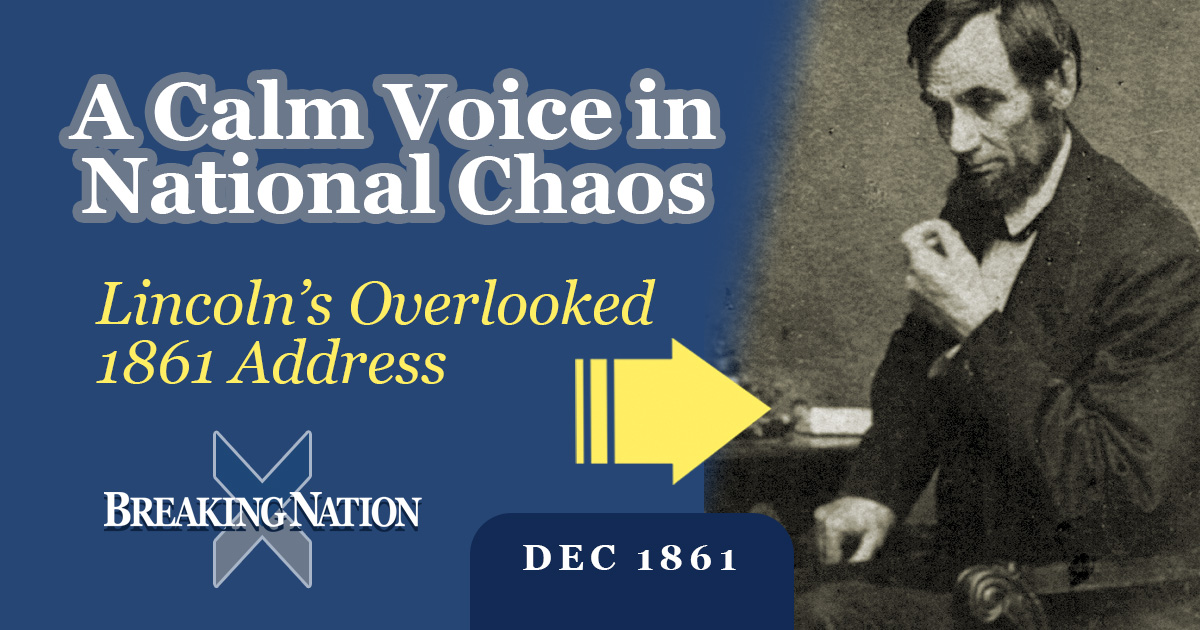
President Lincoln’s State of the Union message on December 3, 1861, delivered in the darkest early months of the Civil War, stands out as one of the most consequential presidential communications of the era. Though overshadowed by later, more quotable speeches, this first wartime message reveals Lincoln’s evolving political strategy, his sharpening moral framework, and his determination to reframe the Union cause in ways Americans could rally behind. In about 8,000 words, Lincoln laid down a blueprint for how he intended not only to fight the war but also to redefine the nation emerging from it.
At its core, the message was an assertion of constitutional legitimacy. Lincoln aimed to show that secession was not merely illegal but institutionally impossible—a political fiction that collapsed the moment it was tested. He reviewed federal operations across the states, emphasizing that the machinery of government, from the Treasury to the Navy, continued functioning despite rebellion. That point mattered: Lincoln wanted Congress and the public to see the Union as resilient, self-correcting, and worth defending through force of arms. He offered a steady, almost managerial assurance that despite early battlefield setbacks, the government was stable and the war effort increasingly coordinated.
But the message’s deeper significance lies in how Lincoln subtly expanded the meaning of the conflict. While he was not yet ready to embrace full emancipation, he strongly hinted that slavery was becoming incompatible with Union war aims. His discussion of confiscation policies, the status of enslaved people fleeing to Union lines, and the gradual undermining of slave labor in rebel states signaled an emerging shift: the war was beginning to erode slavery by necessity, and Lincoln was preparing the public for this reality. In this sense, the December 1861 message served as a bridge between a war fought solely to restore the Union and the later, more transformative war to abolish slavery.
Lincoln also used the address to champion innovation and national development. He argued for modernized infrastructure, expanded rail links, Western settlement, and scientific advancement—a vision of a more unified, interconnected, and future-oriented America. Even amid crisis, he framed the war as an opportunity to accelerate national progress rather than retreat into defensive retrenchment.
Finally, the tone of the message is noteworthy. It is measured, calm, almost technocratic. Lincoln avoided triumphalism and instead conveyed a steady confidence rooted in democratic fundamentals. At a moment when many feared the nation was coming apart, Lincoln’s December 3, 1861 State of the Union served as a reassurance: the Union still lived, had purpose, and possessed the means and the moral standing to prevail.
Breaking Nation: A Civil War Podcast explores the American Civil War, its turning points, and our national memory. Discover full episodes, transcripts, and resources at www.breakingnation.com — your destination for in-depth Civil War podcast content and fresh perspectives on America’s past. Listen on Apple Podcasts, Spotify and Amazon Music.
A Crisis in Richmond: Why Davis Reorganized His Cabinet