The Battle of Valverde: The Civil War in the Wild West
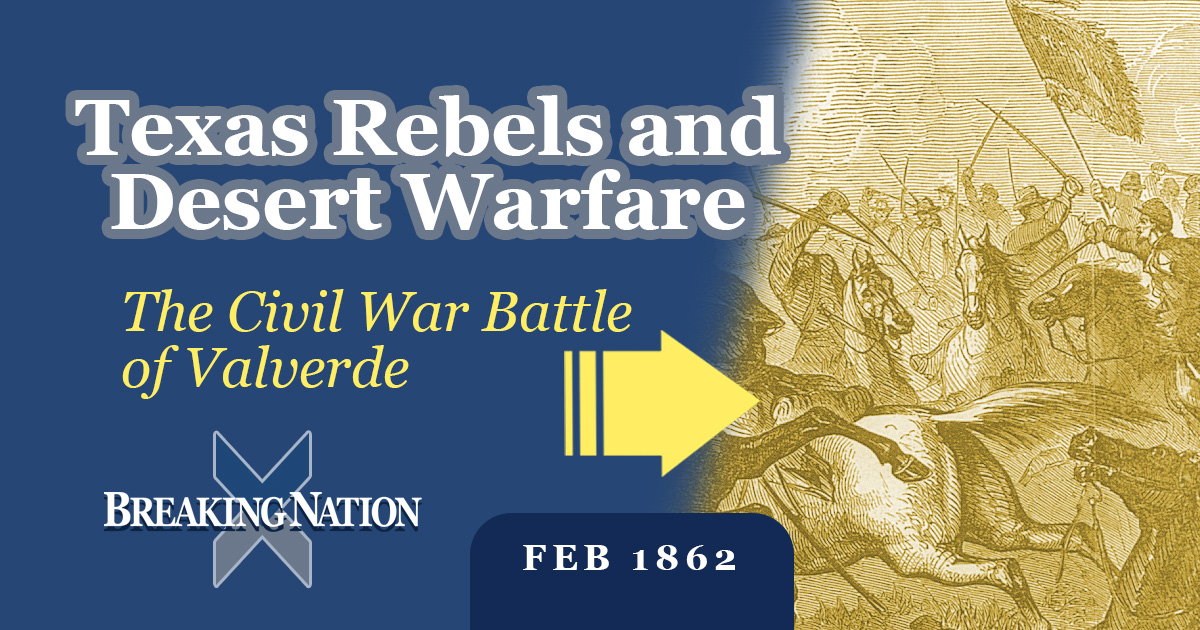
The Battle of Valverde, fought on February 21, 1862 along the Rio Grande in New Mexico Territory, holds an outsized significance in the Civil War despite its remote setting and relatively modest scale. It was the largest engagement of the war in the Far West and a critical episode in the Confederacy’s ambitious—but ultimately doomed—campaign to extend its influence into the Southwest.
Valverde occurred during General Henry H. Sibley’s New Mexico Campaign, an effort to seize the territory, capture its supplies, and potentially open a corridor to Colorado’s gold fields and the Pacific. Confederate forces, largely composed of Texas volunteers, clashed with Union troops under Colonel Edward Canby near Fort Craig. While the Union army held a strong defensive position, the battle unfolded in a series of confused, hard-fought engagements typical of warfare on the frontier: improvised tactics, difficult terrain, and long supply lines shaped every decision.
Tactically, Valverde was a Confederate victory. Southern troops managed to overrun Union artillery positions and force Canby’s men back toward Fort Craig. This success gave Sibley temporary control of the battlefield and allowed his army to continue north along the Rio Grande. In isolation, the battle suggested that Confederate arms could prevail even far from the traditional theaters of war, bolstering Southern hopes that the Southwest might become a meaningful part of the Confederacy.
Strategically, however, Valverde’s significance lies in how little it ultimately accomplished. Despite winning the field, the Confederates failed to capture Fort Craig itself, leaving a strong Union garrison intact behind them. This decision proved costly. By bypassing the fort, Sibley extended his supply lines deeper into hostile territory, relying on limited local resources and vulnerable wagon trains. The consequences of this gamble became clear weeks later when Confederate forces suffered a decisive defeat at Glorieta Pass, often called the “Gettysburg of the West.”
Valverde also highlights the broader importance of logistics and geography in the Civil War. In the arid New Mexico Territory, control of rivers, forts, and supply depots mattered more than dramatic battlefield victories. The battle demonstrated that tactical success could not compensate for strategic overreach, especially in a region where reinforcements and resupply were painfully slow.
Finally, the Battle of Valverde underscores the truly continental scope of the Civil War. Though overshadowed by events in Virginia and Tennessee, fighting in New Mexico revealed how seriously both sides viewed the West’s economic and strategic potential. Valverde was a fleeting Confederate triumph, but one that ultimately marked the high-water point of Southern hopes in the Far Southwest.
Breaking Nation: A Civil War Podcast explores the American Civil War, its turning points, and our national memory. Discover full episodes, transcripts, and resources at www.breakingnation.com — your destination for in-depth Civil War podcast content and fresh perspectives on America’s past. Listen on Apple Podcasts, Spotify and Amazon Music.

The Emancipation Plan You’ve Probably Never Heard Of