“Not War as We Knew It”: The Bloody Lesson of Shiloh
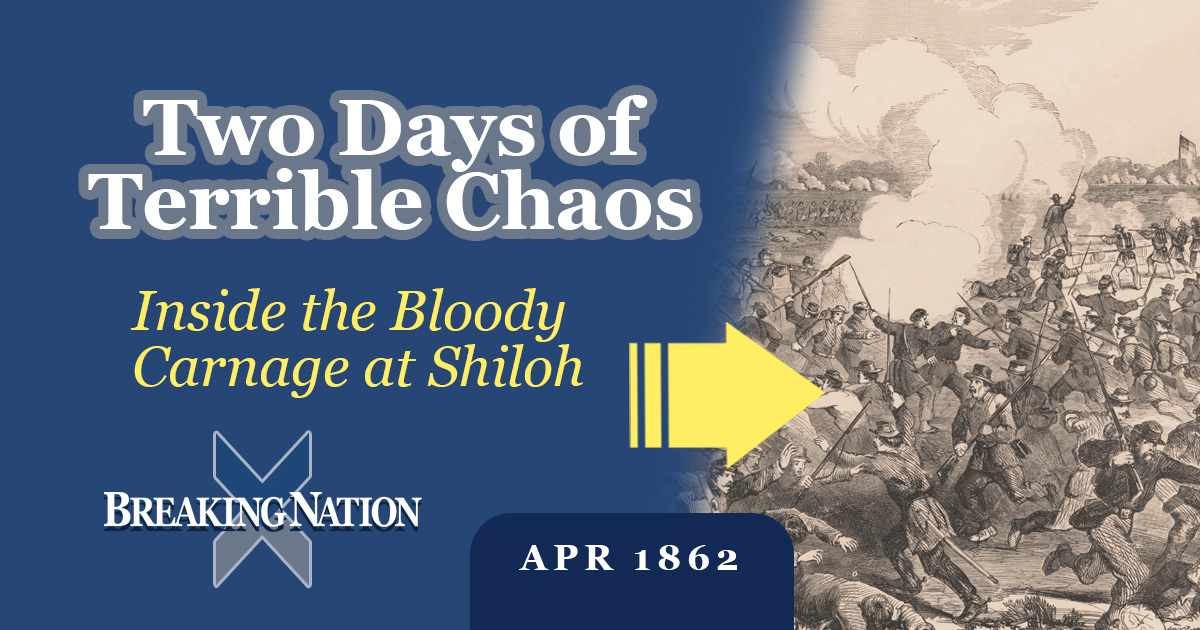
The Battle of Shiloh, fought on April 6–7, 1862, along the Tennessee River near Pittsburg Landing, marked a pivotal moment in the early Western Theater of the American Civil War. At the time, it was the bloodiest battle in American history, shocking a public that had largely expected a short and relatively bloodless conflict. The scale of the casualties—over 23,000 combined killed, wounded, and missing—fundamentally altered Northern and Southern perceptions of the war’s likely duration and cost.
Strategically, Shiloh represented a crucial Union effort to consolidate gains in Tennessee following earlier victories at Forts Henry and Donelson. Under the command of Ulysses S. Grant, Union forces encamped near Pittsburg Landing were caught off guard by a surprise Confederate attack led by Albert Sidney Johnston and P. G. T. Beauregard. The ferocity of the initial Confederate assault drove Union troops back toward the river, producing desperate fighting at positions like the “Hornet’s Nest,” where Union soldiers mounted a stubborn defense that bought critical time.
The battle’s turning point came with Johnston’s death on the afternoon of April 6, a significant blow to Confederate leadership in the West. Johnston had been widely regarded as one of the Confederacy’s most capable generals, and his loss disrupted Confederate momentum at a critical juncture. Overnight, Union reinforcements under Don Carlos Buell arrived, allowing Grant to launch a powerful counterattack on April 7 that ultimately forced Confederate forces to retreat.
In terms of military significance, Shiloh demonstrated both the importance of preparation and the increasing complexity of Civil War combat. Grant was criticized for his lack of entrenchment and readiness, yet his determination and refusal to retreat set a precedent for the kind of relentless warfare that would eventually define Union strategy. The battle also underscored the logistical importance of river systems in the Western Theater, with the Tennessee River serving as a vital artery for Union troop movement and supply.
More broadly, Shiloh signaled a transition in the nature of the war itself. The staggering casualties made it clear that victory would require sustained effort, coordination, and sacrifice on an unprecedented scale. It also elevated Grant’s prominence despite controversy, setting him on a path toward higher command. Ultimately, the Battle of Shiloh was not merely a tactical Union victory; it was a sobering introduction to the brutal realities of modern warfare and a turning point that reshaped expectations for the conflict’s future.
Breaking Nation: A Civil War Podcast explores the American Civil War, its turning points, and our national memory. Discover full episodes, transcripts, and resources at www.breakingnation.com — your destination for in-depth Civil War podcast content and fresh perspectives on America’s past. Listen on Apple Podcasts, Spotify and Amazon Music.

Glorieta Pass and the Collapse of Confederate Western Ambitions