Lincoln’s Push for Unified Action in the Civil War
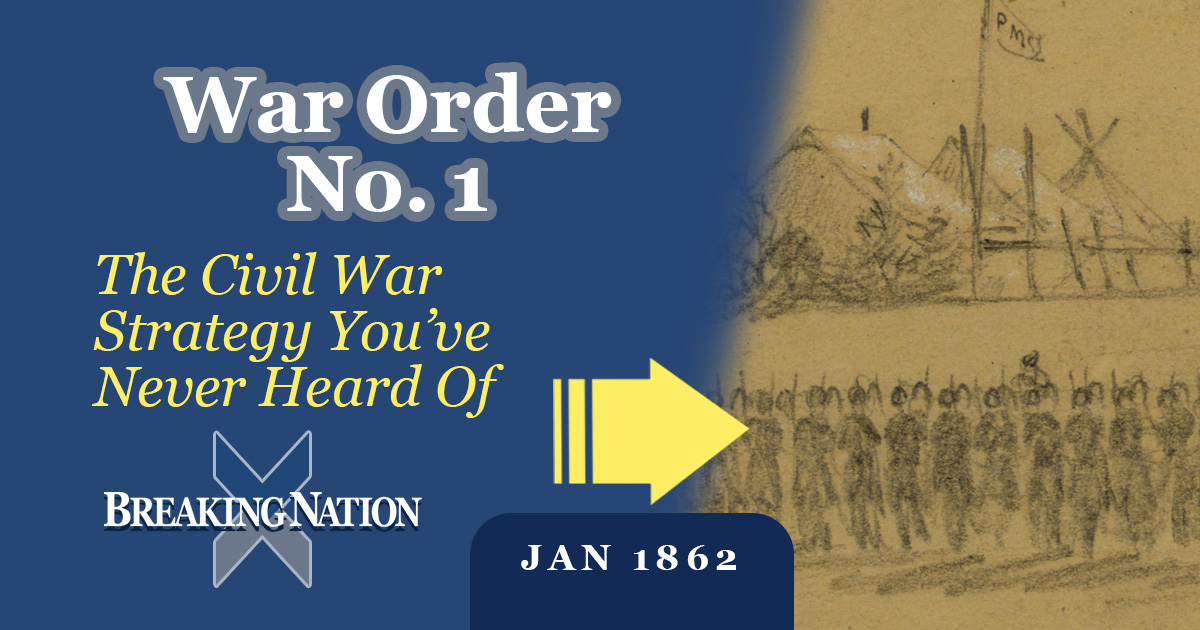
On January 27, 1862, President Abraham Lincoln issued General War Order No. 1, a directive that may seem like a footnote in Civil War history but carries significant strategic weight. The order called for a coordinated Union offensive, combining land and naval forces, to commence no later than February 22, 1862. This wasn’t just bureaucratic scheduling; it was a clear signal of Lincoln’s evolving approach to wartime leadership and strategic coordination.
The timing of the order is important. By early 1862, the Union had suffered a series of indecisive engagements, and morale needed a boost. Lincoln recognized that piecemeal campaigns and disjointed efforts by the Army and Navy were slowing progress against the Confederacy. General War Order No. 1 represented a push toward synchronization—a recognition that modern warfare, even in the 19th century, required integrated operations. By insisting that land and naval offensives occur in concert, Lincoln was essentially telling his commanders that isolated victories would no longer suffice; success depended on unified action.
The order also reflects Lincoln’s growing assertiveness in military affairs. Up to this point, he had largely relied on generals like George B. McClellan and Henry W. Halleck to design campaigns. With this directive, Lincoln was demonstrating that he was not a passive civilian observer; he was willing to set timelines and coordinate multiple theaters to achieve strategic objectives. In essence, War Order No. 1 shows a president beginning to act less like a distant administrator and more like a general-in-chief, understanding that decisive action required leadership from the top.
Strategically, the order set the stage for a series of offensives that would shape the early months of 1862. By coordinating the Army’s movements with naval operations along critical rivers and ports, the Union aimed to seize control of key transportation arteries and choke points in the Confederacy. This approach foreshadowed later successes in campaigns along the Mississippi River and the Tennessee Valley, where combined operations proved decisive.
In a broader sense, General War Order No. 1 illustrates Lincoln’s understanding of the Civil War as a national effort that transcended individual battlefields. It was not just about winning engagements; it was about applying sustained, coordinated pressure to weaken the Confederacy systematically. The order may seem procedural on paper, but in practice, it marked a turning point in Union strategy—a shift toward integrated, deadline-driven operations that would become a hallmark of Northern military success.
Breaking Nation: A Civil War Podcast explores the American Civil War, its turning points, and our national memory. Discover full episodes, transcripts, and resources at www.breakingnation.com — your destination for in-depth Civil War podcast content and fresh perspectives on America’s past. Listen on Apple Podcasts, Spotify and Amazon Music.
1862 Civil Liberties Clash: Davis, Congress, and Habeas Corpus