January 1862: When Grant Quietly Seized the Initiative
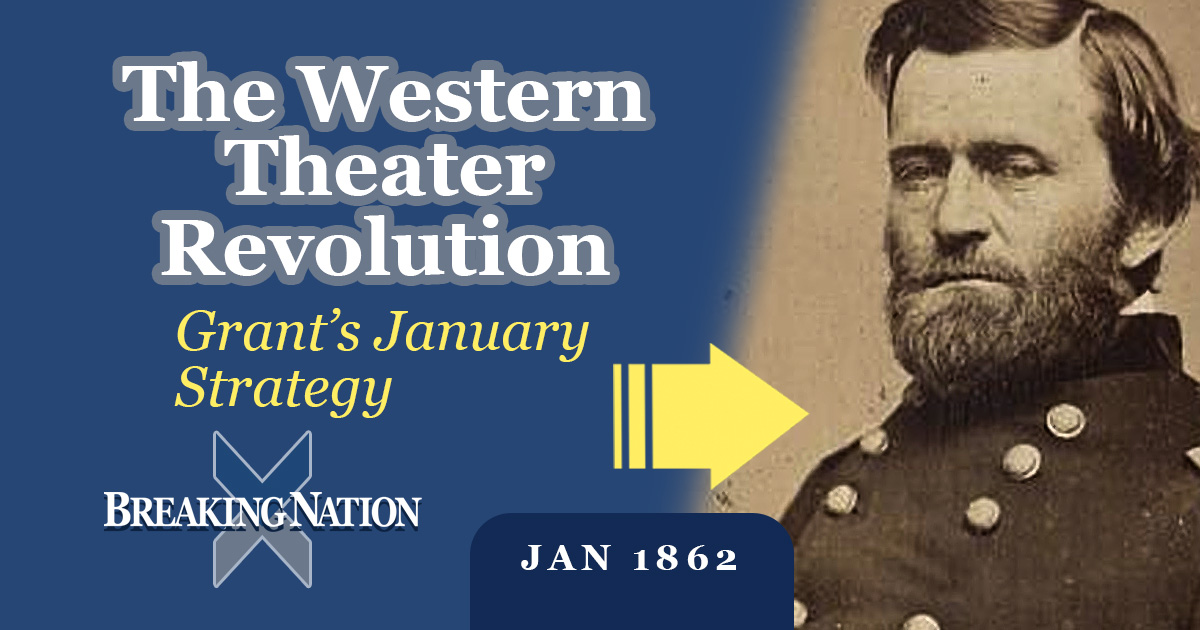
In January 1862, Ulysses S. Grant’s actions in Kentucky marked a quiet but decisive turning point in the Western Theater of the Civil War. While eastern newspapers fixated on George McClellan’s ponderous Army of the Potomac, Grant was doing something far more consequential: moving. His advances along the Tennessee and Cumberland Rivers demonstrated a new, aggressive Union strategy and revealed Grant’s emerging importance as a commander willing to act without waiting for perfect conditions.
Kentucky’s strategic importance was enormous. As a border state controlling key rivers and rail corridors, it served as the gateway to the Confederate heartland of Tennessee. By early 1862, Confederate forces held strong positions at Fort Henry on the Tennessee River and Fort Donelson on the Cumberland. These forts anchored a defensive line meant to block Union penetration into the Deep South. Grant recognized that rivers, not roads, would decide the campaign. With the cooperation of Flag Officer Andrew H. Foote and the Western Gunboat Flotilla, Grant prepared to exploit Union naval superiority in ways Confederate commanders struggled to counter.
Although Grant’s most famous victories—Fort Henry on February 6 and Fort Donelson ten days later—came after January, the planning, positioning, and momentum began earlier. In January 1862, Grant persistently pressed his superiors for permission to strike these river forts. His headquarters at Cairo, Illinois, became a hub of logistical preparation and reconnaissance. Grant’s insistence on offensive action contrasted sharply with the defensive caution that characterized much Union leadership at the time. This was not recklessness, but a clear-eyed assessment that Confederate lines in Kentucky and Tennessee were stretched thin and vulnerable to coordinated land-and-naval assaults.
Grant’s activity in Kentucky also intersected with broader Union successes. On January 19, 1862, the Union victory at Mill Springs helped stabilize eastern Kentucky, freeing Union forces and attention for operations farther west. Grant’s looming presence on the rivers amplified the pressure on Confederate commanders, forcing them to defend multiple threatened points simultaneously. The result was strategic paralysis: Confederate leaders could neither abandon their forts nor adequately reinforce them.
The significance of Grant’s January 1862 actions lies less in battlefield drama and more in what they revealed about the war’s future. Grant showed that the Union could win by seizing the initiative, leveraging industrial and naval strength, and attacking Confederate logistics rather than merely reacting to Confederate moves. Kentucky became the proving ground for this approach. Within weeks, Grant’s advances would shatter the Confederate defensive line, open Tennessee to invasion, and propel him onto the national stage. January 1862, then, was the month when Grant’s way of war quietly but decisively began to reshape the conflict.
Breaking Nation: A Civil War Podcast explores the American Civil War, its turning points, and our national memory. Discover full episodes, transcripts, and resources at www.breakingnation.com — your destination for in-depth Civil War podcast content and fresh perspectives on America’s past. Listen on Apple Podcasts, Spotify and Amazon Music.
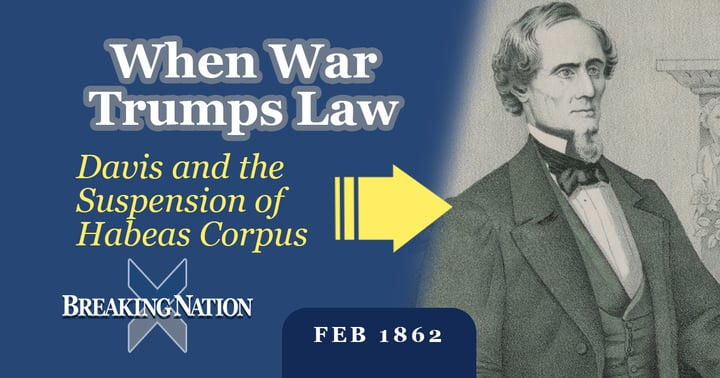
1862 Civil Liberties Clash: Davis, Congress, and Habeas Corpus