How Fort Henry Opened the Door to Union Victory in the West
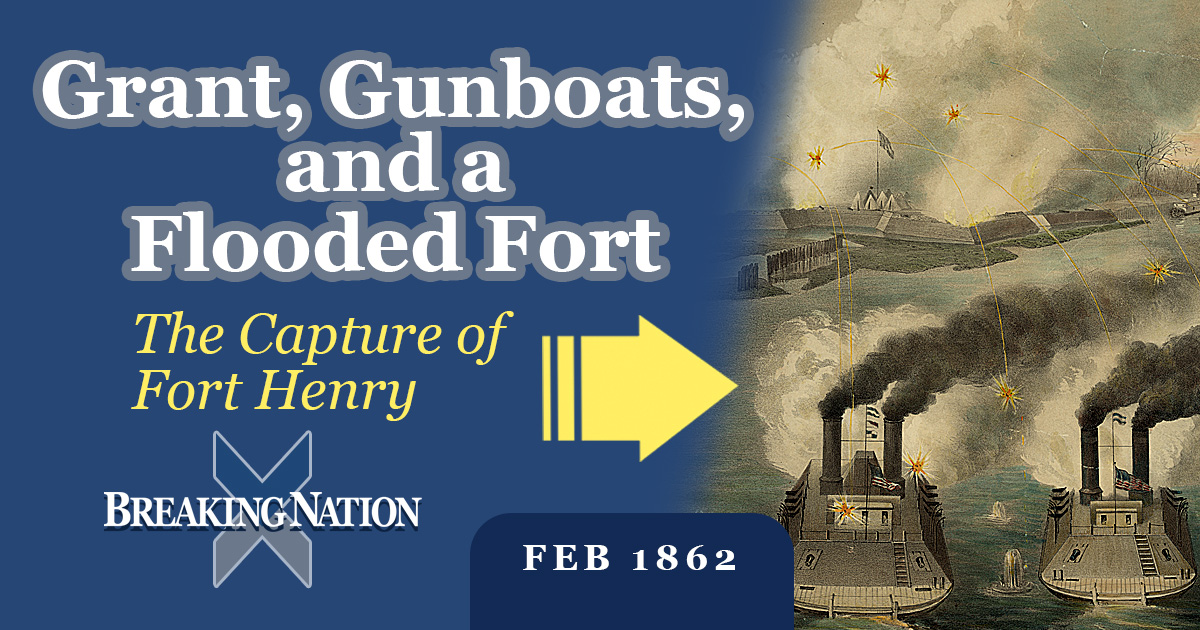
The surrender of Fort Henry, Tennessee, on February 6, 1862, marked one of those deceptively small moments in the Civil War that carried outsized strategic consequences. On paper, Fort Henry was a modest Confederate earthwork on the Tennessee River. In practice, its collapse cracked open the Confederate defensive line in the western theater and announced that the Union had finally found a winning formula: coordinated army–navy operations, aggressive leadership, and mastery of the river system.
The fort’s weakness was partly geographic and partly conceptual. Built on low, flood-prone ground, Fort Henry was vulnerable to the seasonal rise of the Tennessee River. By early February 1862, high water had turned the surrounding area into a swamp and partially submerged the fort’s earthworks, rendering many of its guns ineffective. Confederate Brigadier General Lloyd Tilghman recognized the problem and, in a telling decision, evacuated most of the garrison to nearby Fort Donelson, staying behind with a small detachment to delay the inevitable. When Union Flag Officer Andrew H. Foote’s gunboats steamed into range, the outcome was never in doubt. After a brief but intense bombardment, Tilghman surrendered.
The significance of the surrender lay less in the fight itself—short, one-sided, and almost anticlimactic—than in what it unlocked. Fort Henry’s fall gave the Union uncontested control of the Tennessee River, a navigable highway deep into the Confederate interior. Union forces could now penetrate hundreds of miles south, threatening vital rail lines, supply depots, and cities in Tennessee, Mississippi, and Alabama. The psychological impact was immediate: for the first time, the Confederate western defensive line had been decisively breached.
Just as important was the emergence of Ulysses S. Grant as a commander willing to move quickly and exploit success. Grant’s coordination with Foote demonstrated how river gunboats and infantry could operate in tandem, foreshadowing the joint operations that would define Union strategy in the West. Fort Henry was followed almost immediately by the investment and capture of Fort Donelson, where Grant earned his nickname, “Unconditional Surrender,” and forced the Confederacy to abandon much of Tennessee.
In a broader sense, Fort Henry signaled a shift in momentum. The Union, often criticized early in the war for caution and delay, showed it could plan, move, and strike decisively. The Confederacy, meanwhile, learned that poorly sited fortifications and fragmented command could not withstand coordinated assaults. Though overshadowed by larger and bloodier battles, the surrender of Fort Henry was a hinge point—quietly opening the door to Union dominance of the western rivers and setting the stage for the long unraveling of Confederate control in the heartland.
Breaking Nation: A Civil War Podcast explores the American Civil War, its turning points, and our national memory. Discover full episodes, transcripts, and resources at www.breakingnation.com — your destination for in-depth Civil War podcast content and fresh perspectives on America’s past. Listen on Apple Podcasts, Spotify and Amazon Music.

A Crisis in Richmond: Why Davis Reorganized His Cabinet