Glorieta Pass and the Collapse of Confederate Western Ambitions
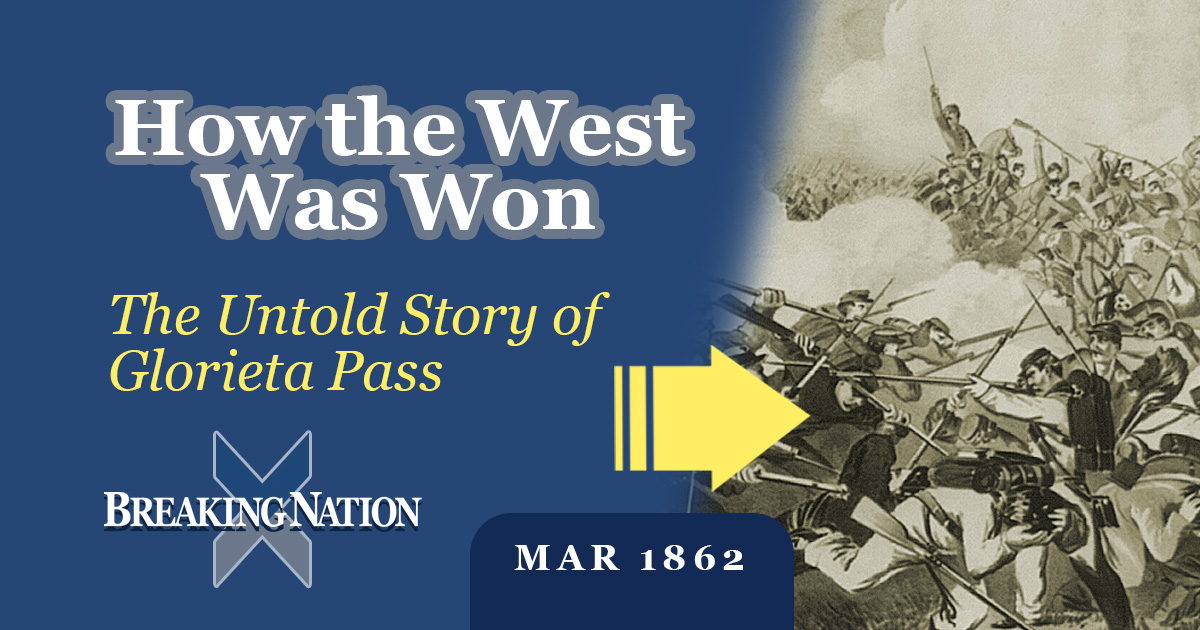
The Battle of Glorieta Pass, fought March 26–28, 1862, in the New Mexico Territory, stands as one of the most strategically consequential engagements in the Civil War’s western theater. Often dubbed the “Gettysburg of the West,” its importance lies less in battlefield casualties than in its decisive impact on Confederate ambitions in the Southwest.
The campaign was part of a broader Confederate effort to extend control from Texas into New Mexico and beyond, aiming ultimately for access to the Pacific and its ports. Brigadier General Henry Hopkins Sibley led this push, hoping to secure mineral wealth, disrupt Union communications, and potentially threaten California. Opposing him were Union forces under Colonel John P. Slough, with key contributions from Major John Chivington.
Tactically, the battle itself was inconclusive. Confederate troops initially held the field after hard fighting along the narrow mountain pass, suggesting a local success. However, the true turning point came away from the main line of battle. In a bold flanking maneuver, Chivington led Union forces to attack the Confederate supply train at Johnson’s Ranch, destroying wagons, ammunition, and provisions. This action effectively stranded Sibley’s army deep in hostile territory without the means to sustain itself.
The destruction of these supplies transformed a nominal Confederate victory into a strategic defeat. Deprived of logistics, Sibley was forced to abandon his campaign and retreat back to Texas. This outcome halted Confederate expansion into the Southwest and ensured that the region—including vital routes and resources—remained under Union control for the remainder of the war.
The significance of Glorieta Pass also lies in its illustration of Civil War warfare beyond the major eastern armies. It highlights the importance of logistics, terrain, and local initiative in determining outcomes. The rugged landscape of the Sangre de Cristo Mountains amplified the effects of supply disruption, demonstrating that in such environments, operational success depended as much on maintaining supply lines as on winning engagements.
Moreover, the battle underscores the multinational and diverse character of the war in the West. Union forces included New Mexican volunteers and Colorado troops, reflecting the varied composition of Civil War armies far from the eastern seaboard. Their role in securing the region points to the broader national stakes of the conflict, even in seemingly peripheral theaters.
In sum, the Battle of Glorieta Pass was a pivotal moment that curtailed Confederate ambitions in the Far West. Its legacy rests not in dramatic battlefield maneuvers alone, but in the decisive interplay between strategy and logistics that shaped the war’s continental dimensions.
Breaking Nation: A Civil War Podcast explores the American Civil War, its turning points, and our national memory. Discover full episodes, transcripts, and resources at www.breakingnation.com — your destination for in-depth Civil War podcast content and fresh perspectives on America’s past. Listen on Apple Podcasts, Spotify and Amazon Music.
The Battle of Kernstown: When Losing Became a Strategic Victory