From Campfires to Parlors: Christmas 1861 Across America
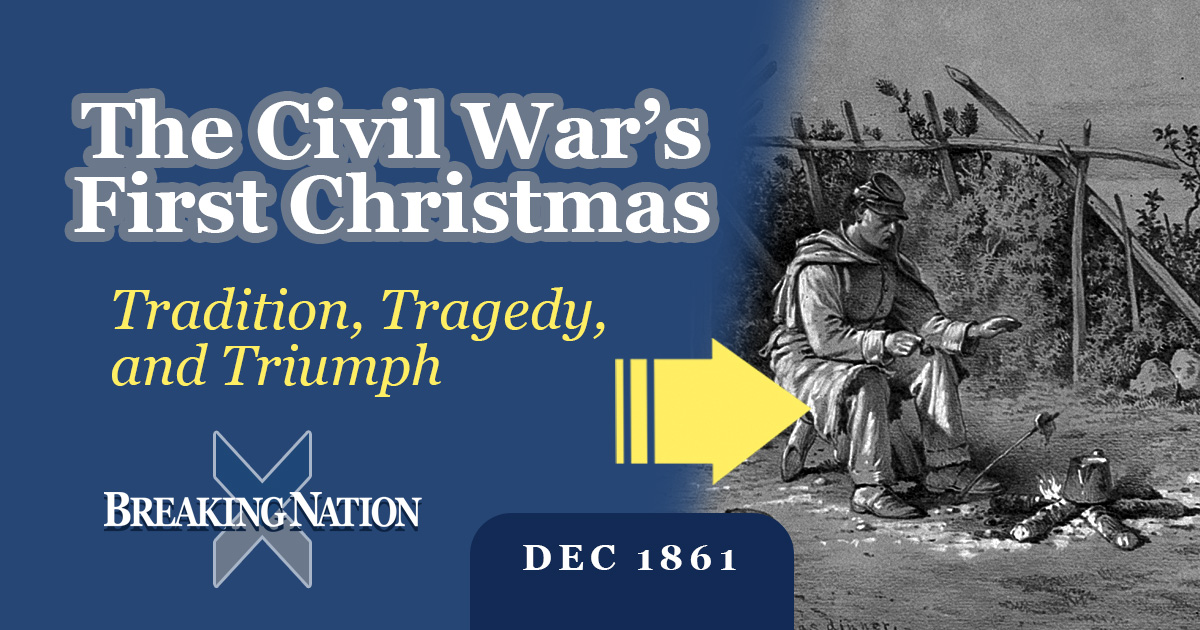
The first Christmas of the American Civil War, celebrated in December 1861, carried a significance far deeper than the routine observance of a holiday. It marked the moment when Americans—North and South alike—faced the collision between familiar traditions and a rapidly escalating national crisis. In many ways, Christmas 1861 became a cultural barometer, revealing how ordinary people tried to preserve normalcy even as the world they knew was breaking apart.
For the North, the holiday arrived after a string of shocks: the disastrous Battle of Bull Run, the ongoing Union mobilization, and the sobering realization that the war would not be short or simple. Christmas became an early test of emotional resilience. Soldiers in winter quarters decorated huts with whatever greenery they could gather and shared makeshift dinners that blended military rations with packages from home. Newspapers published stories encouraging patriotic cheer and charitable giving, framing the Union cause as a righteous struggle that demanded both sacrifice and steadfastness. The holiday, in a sense, was repurposed as a morale-building tool, helping civilians and soldiers imagine a future in which national unity might be restored.
In the Confederacy, Christmas 1861 took on a similarly poignant but distinctly different tone. Southerners faced an emerging blockade, rising prices, and the first hints of wartime scarcity. Yet Christmas celebrations persisted in homes and churches, often marked by sermons emphasizing divine favor for the Confederate cause. The holiday provided an opportunity to assert cultural continuity—and even legitimacy—amid the uncertainty of secession. Gift-giving, hospitality, and religious services became quietly defiant acts: signals that life in the South could still resemble the familiar rhythms of antebellum society.
At the same time, the war introduced new emotional tensions into the season. Families experienced their first Christmas with sons, husbands, and brothers away at the front. Letters traveled in every direction, many filled with a blend of nostalgia and determination. These correspondences did more than link home and camp; they began shaping a shared emotional vocabulary for wartime separation that would define coming Christmases as the conflict dragged on.
The holiday even influenced national imagery. Although Thomas Nast’s famous wartime Christmas illustrations would not appear until later in the conflict, 1861 set the stage by demonstrating that Americans were eager to use the season’s symbolism—home, hearth, generosity, peace—to frame their hopes for the war’s outcome. Christmas thus served not merely as a moment of diversion but as a cultural anchor point: a reminder that, despite profound division, Americans were still tied to a shared calendar, shared rituals, and shared longing for peace.
Breaking Nation: A Civil War Podcast explores the American Civil War, its turning points, and our national memory. Discover full episodes, transcripts, and resources at www.breakingnation.com — your destination for in-depth Civil War podcast content and fresh perspectives on America’s past. Listen on Apple Podcasts, Spotify and Amazon Music.

The Emancipation Plan You’ve Probably Never Heard Of