Edwin Stanton and the Birth of a Hard-Driving Union War Machine
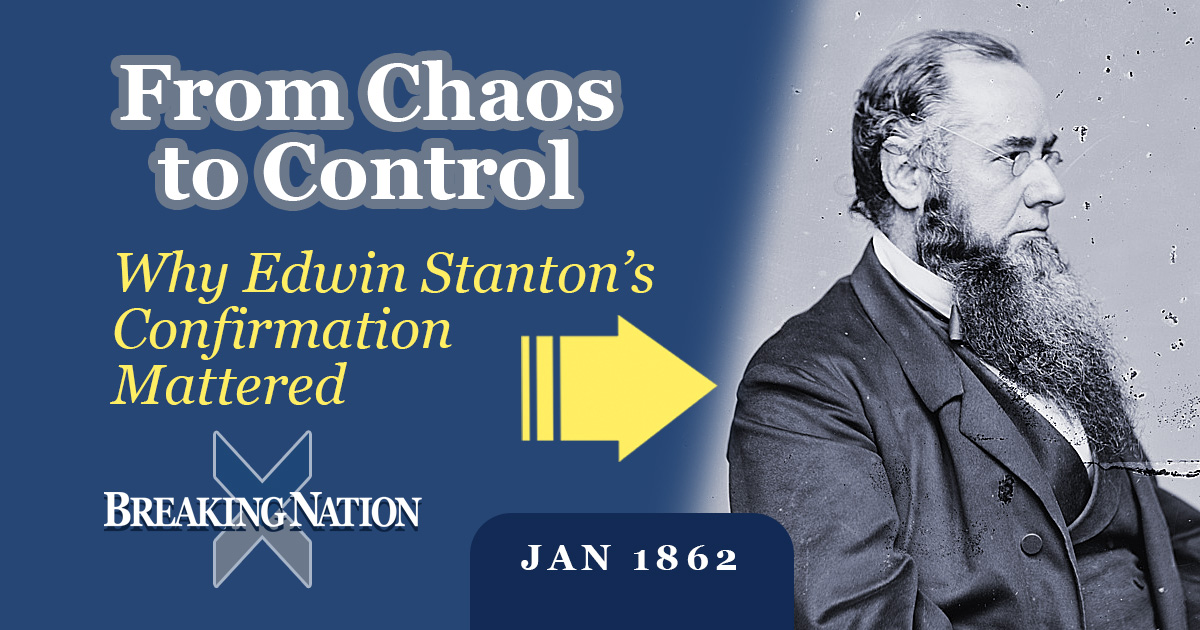
The Senate’s confirmation of Edwin M. Stanton as Secretary of War on January 15, 1862 marked one of the most consequential administrative decisions of the American Civil War. At a moment when the Union war effort seemed adrift—plagued by delays, indecision, and mounting public frustration—Stanton’s arrival signaled a dramatic shift in both tone and substance at the War Department.
Stanton replaced Simon Cameron, whose tenure had been marred by accusations of corruption, inefficiency, and a lack of administrative control. By early 1862, it was clear that winning the war required not just armies in the field but a central bureaucracy capable of managing logistics, manpower, intelligence, and industrial output on an unprecedented scale. Stanton, a former Democrat and no natural ally of Abraham Lincoln, nonetheless brought precisely the qualities the moment demanded: relentless energy, legal precision, and a fierce sense of duty.
The Senate’s swift confirmation reflected bipartisan recognition that the war effort needed professionalization. Stanton immediately imposed order where chaos had reigned. He centralized decision-making, tightened procurement procedures, cracked down on fraud, and demanded constant reports from generals in the field. His famously gruff manner—often bordering on abrasive—was not merely a personality trait but a management style designed to convey urgency. Under Stanton, the War Department became a nerve center of the Union war machine rather than a passive clearinghouse.
Equally significant was Stanton’s evolving relationship with Lincoln. Although Stanton initially held Lincoln in low regard, he quickly came to respect the president’s political instincts and moral clarity. Their partnership became one of the most effective working relationships of the war. Lincoln provided strategic vision and political balance; Stanton executed policy with ruthless efficiency. The Senate’s confirmation thus indirectly strengthened the presidency itself by giving Lincoln a cabinet officer willing to act decisively in his name.
Stanton’s tenure also carried profound civil liberties implications. He supported expanded federal authority, including the use of military courts and the suspension of habeas corpus in certain areas. While controversial then and now, these measures reflected the broader reality that the Civil War forced Americans to reconsider the balance between liberty and national survival. Stanton was not merely administering a war; he was helping redefine the powers of the modern American state.
In retrospect, January 15, 1862 stands as a turning point. The Senate’s confirmation of Edwin Stanton did not guarantee Union victory, but it provided the organizational backbone necessary to pursue it. By bringing discipline, accountability, and urgency to the War Department, Stanton helped transform the Union’s vast resources into effective power—and in doing so, reshaped how America wages war.
Breaking Nation: A Civil War Podcast explores the American Civil War, its turning points, and our national memory. Discover full episodes, transcripts, and resources at www.breakingnation.com — your destination for in-depth Civil War podcast content and fresh perspectives on America’s past. Listen on Apple Podcasts, Spotify and Amazon Music.
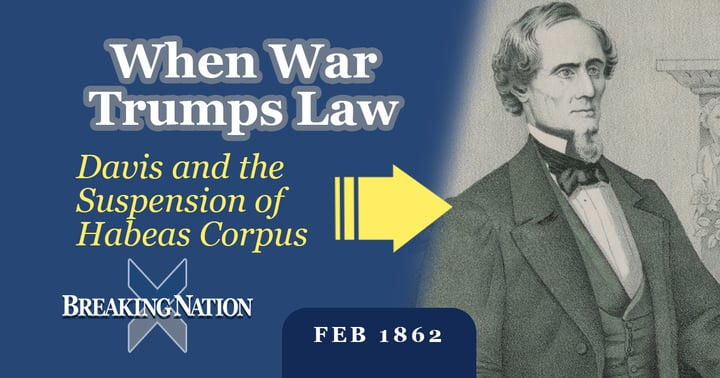
1862 Civil Liberties Clash: Davis, Congress, and Habeas Corpus